
VISION Tablets
Desogestrel 0.15 mg + Ethinyl Estradiol 0.03 mg Tablets
VISION is a combined oral hormonal contraceptive containing desogestrel and ethinyl estradiol. When taken correctly, combined contraceptive pills help prevent pregnancy. Depending on an individual's circumstances and the prescribing clinician's advice, this type of medicine may also help make menstrual bleeding more predictable and reduce period pain.
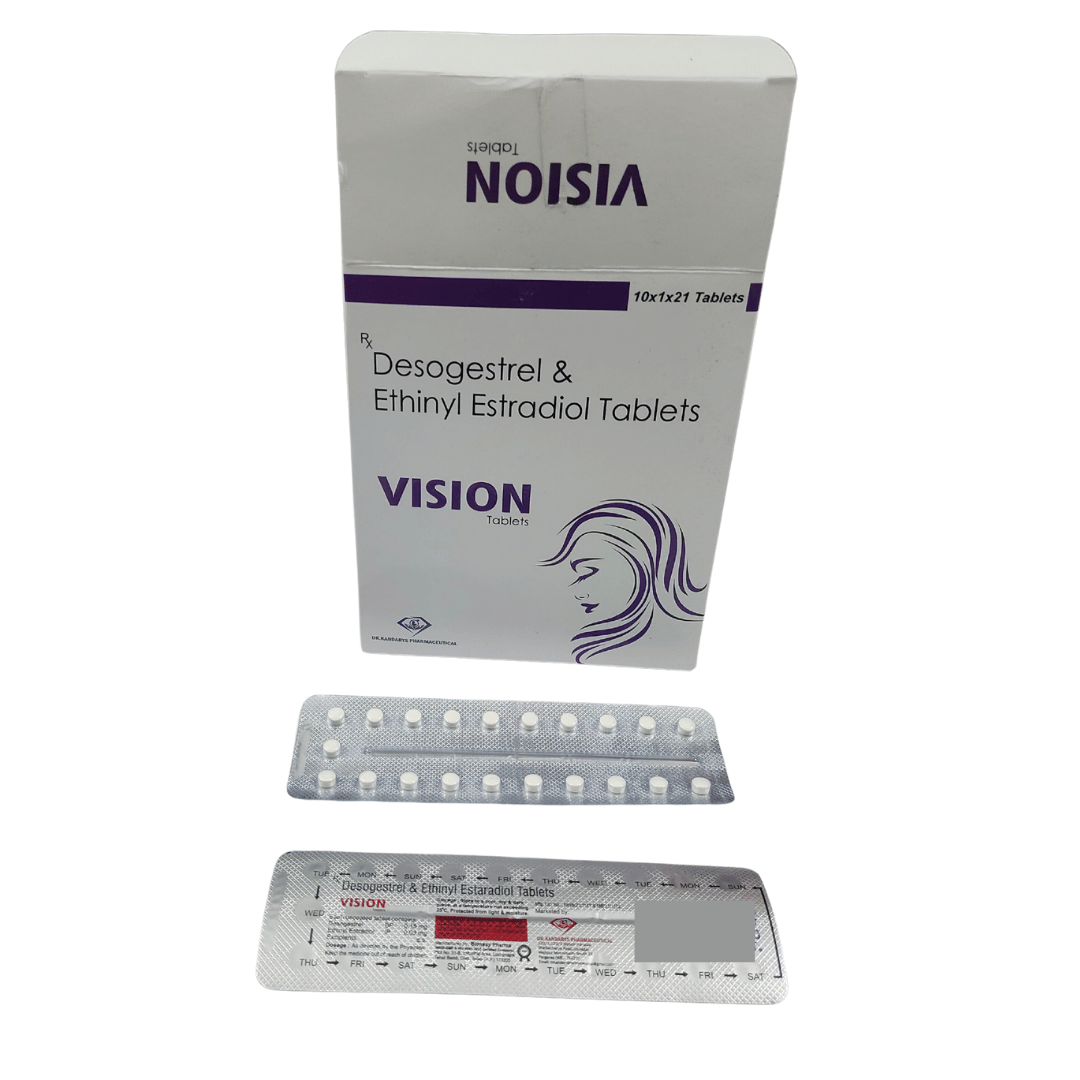
VISION Tablets — Combined hormonal contraceptive
Composition
Desogestrel: 0.15 mg per tablet.
Ethinyl Estradiol: 0.03 mg (30 micrograms) per tablet.
These are the active ingredients listed in the supplied product description. Check the manufacturer's packaging and leaflet for the exact pack format, inactive ingredients, and instructions.
Product Introduction
VISION contains a progestogen (desogestrel) and an estrogen (ethinyl estradiol). Combined oral contraceptives primarily prevent pregnancy by suppressing ovulation and also change cervical mucus and the uterine lining. This medicine is not suitable for everyone, so a healthcare professional should review medical history, blood pressure, risk factors, and other medicines before use.
Uses of Medicine
Pregnancy prevention
Used as an oral hormonal contraceptive to help prevent pregnancy when taken correctly and consistently according to the product instructions.
Menstrual cycle management
Combined contraceptive pills may help make periods more regular, lighter, or less painful for some users. Suitability depends on individual symptoms and clinical assessment.
Benefits and Potential Benefits
- Provides an effective method of contraception when used correctly and consistently.
- May help regulate menstrual bleeding patterns.
- May reduce menstrual blood loss and period-related discomfort in some users.
- Offers a reversible contraceptive option; fertility generally returns after discontinuation, although timing varies.
Benefits vary between individuals. No contraceptive method is completely effective, and correct use is important.
Possible Side Effects
Some effects may occur when starting a combined contraceptive pill and may improve over time. Contact a healthcare professional if symptoms are persistent or troublesome.
Commonly reported effects
- Spotting or bleeding between periods, especially during the first few months.
- Nausea or stomach discomfort.
- Headache.
- Breast tenderness.
- Mood changes or changes in menstrual bleeding.
Serious warning signs
- One-sided leg pain or swelling.
- Sudden shortness of breath or chest pain.
- Sudden severe headache, vision changes, weakness, or difficulty speaking.
- Severe abdominal pain or yellowing of the skin or eyes.
How to Use
- Use only after a qualified healthcare professional has assessed whether a combined hormonal contraceptive is suitable for you.
- Follow the exact instructions supplied with the VISION pack. Pack formats and schedules can differ, so do not assume a particular number of active or inactive tablets.
- Take the tablet at the prescribed time and follow the pack sequence carefully.
- If a tablet is missed, the advice depends on how many tablets were missed and where you are in the pack. Check the leaflet and ask a pharmacist or clinician promptly; additional contraception or emergency contraception may be needed.
- If vomiting or severe diarrhoea occurs, check the product leaflet or ask a pharmacist because contraceptive protection may be affected.
- If starting the pill, switching methods, or restarting after a break, ask when additional contraception is needed.
How It Works
Desogestrel and ethinyl estradiol work together to prevent pregnancy. Their main effect is to suppress the hormonal signals that trigger ovulation. They also thicken cervical mucus, making it harder for sperm to pass through the cervix, and alter the uterine lining. These effects depend on correct use.
Safety Advice and Precautions
Blood clot risk
Combined hormonal contraceptives increase the risk of blood clots. Tell your clinician if you have a history of blood clots, stroke, heart disease, a clotting disorder, or a close relative who developed a clot at a young age.
Smoking, age, and migraine
This medicine may be unsuitable for people aged 35 or older who smoke and for those with migraine with aura. Discuss smoking status, migraine history, and cardiovascular risk factors before use.
Other medical conditions
Tell your healthcare professional about high blood pressure, liver disease, breast cancer, diabetes with complications, or unexplained vaginal bleeding. These conditions may affect whether this contraceptive is appropriate.
Medicine interactions
Some medicines for epilepsy, tuberculosis, HIV, and certain other conditions, as well as St John's wort, can reduce contraceptive effectiveness. Provide a complete list of medicines and supplements to your clinician or pharmacist.
Pregnancy and breastfeeding
Do not use this contraceptive if you are pregnant. If pregnancy is suspected, seek professional advice. Discuss breastfeeding and the timing of starting or restarting combined hormonal contraception after childbirth with a clinician.
Blood pressure and follow-up
Blood pressure and relevant health risks should be reviewed before starting and periodically during use. Seek reassessment if you develop new or worsening headaches, visual symptoms, or other concerning changes.
Quick Tips
- Keep the tablets in their original pack and follow the pack sequence.
- Use reminders to help take the tablet consistently.
- Keep the patient leaflet available for missed-tablet instructions.
- Ask a pharmacist before starting a new medicine or herbal supplement.
- Remember that this pill does not prevent sexually transmitted infections.
- Seek medical advice if you experience persistent side effects or think you may be pregnant.
Important Medical Disclaimer
This page is for general educational purposes only and does not replace professional medical advice, diagnosis, or treatment. VISION Tablets contain combined hormonal contraceptives and may not be suitable for everyone. The decision to use this medicine should be made with a qualified healthcare professional after reviewing medical history and individual risk factors. Always follow the actual product leaflet and the advice of your doctor or pharmacist.






