
VANKAND-500 INJ.
Vancomycin Hydrochloride 500 mg Injection
VANKAND-500 is an injectable antibiotic containing vancomycin hydrochloride. Vancomycin is used by healthcare professionals to treat certain serious bacterial infections when the medicine is clinically appropriate. Treatment selection depends on the suspected or confirmed organism, infection site, laboratory findings, and the patient's medical condition.
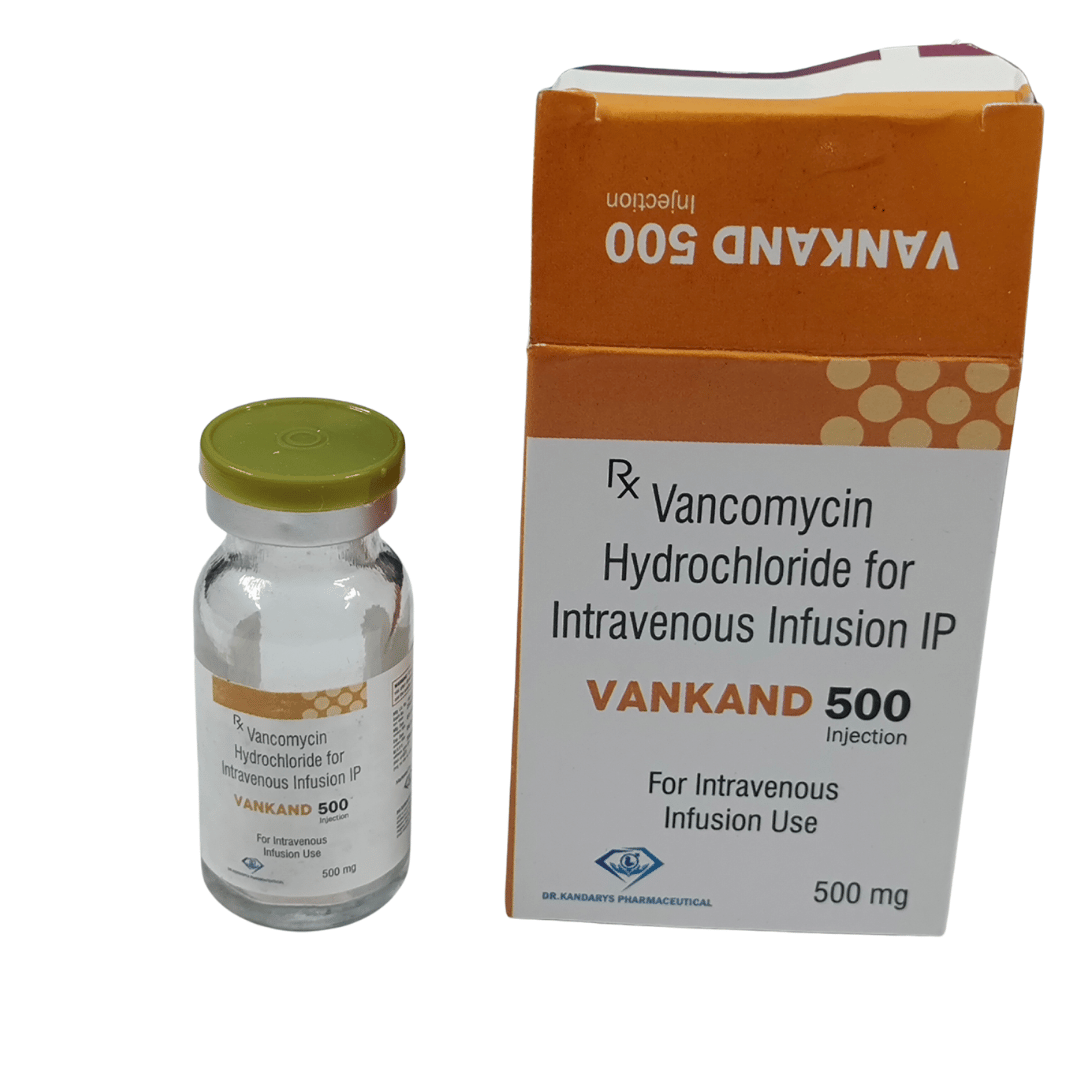
VANKAND-500 INJ. — Vancomycin Hydrochloride 500 mg
Composition
Active ingredient: Vancomycin Hydrochloride I.P. equivalent to Vancomycin 500 mg, as stated in the supplied product description.
Check the manufacturer's label and package insert for the exact formulation, reconstitution instructions, compatible diluents, storage conditions, and expiry details before use.
Product Introduction
Vancomycin is an antibiotic that acts against susceptible Gram-positive bacteria, including certain resistant organisms. Injectable vancomycin is generally reserved for infections that require this type of antibiotic and should be selected according to clinical assessment and, when available, culture and susceptibility results. It does not treat viral infections such as the common cold or influenza.
Uses of Medicine
Serious bacterial infections
May be prescribed for susceptible Gram-positive bacterial infections, including certain serious infections involving the bloodstream, heart valves, bones, joints, skin, or soft tissues, depending on clinical findings.
Resistant bacterial infections
May be used when an infection involves bacteria resistant to other antibiotics, when vancomycin is considered appropriate by the treating clinician.
Benefits and Potential Benefits
- Provides an option for treating certain serious infections caused by susceptible Gram-positive bacteria.
- May be useful when resistant bacteria limit the choice of other antibiotics.
- Can support targeted infection treatment when selected using clinical assessment and microbiology results.
- Allows healthcare teams to monitor treatment response and adjust therapy according to the patient's condition.
Benefits depend on the type of infection, bacterial susceptibility, correct administration, and the patient's response to treatment.
Possible Side Effects
Side effects vary between patients. Some reactions can be serious and require prompt medical attention.
Possible common or infusion-related effects
- Redness, itching, or flushing, particularly during infusion.
- Nausea or other gastrointestinal discomfort.
- Pain, redness, or inflammation around the infusion site.
- Changes in blood counts or other laboratory results.
Serious adverse effects
- Kidney injury, including reduced urine output.
- Hearing changes, ringing in the ears, or dizziness.
- Severe allergic reactions, breathing difficulty, or a marked fall in blood pressure.
- Severe skin reactions, blistering, or sores affecting the mouth or other mucous membranes.
How to Use
- Administer only under the supervision of a qualified healthcare professional.
- The dose and interval depend on factors such as the infection, body weight, kidney function, severity of illness, and measured vancomycin concentrations where indicated.
- For intravenous use, the product must be prepared, diluted, and infused according to its approved product instructions and the hospital's protocol.
- Rapid intravenous administration can cause serious infusion reactions. The infusion rate and duration must be controlled by trained staff; product labelling commonly specifies infusion over at least 60 minutes.
- Do not self-inject, change the dose, or stop treatment without the treating clinician's advice.
How It Works
Vancomycin interferes with bacterial cell-wall formation by binding to specific building blocks needed to build and maintain the cell wall. This weakens susceptible bacteria and helps control the infection. Its activity is primarily against Gram-positive bacteria; it is not a universal antibiotic and will not work against every organism.
Safety Advice and Precautions
Kidney function and drug levels
Kidney function and vancomycin concentrations should be monitored as clinically indicated. Dose adjustment and closer monitoring may be required in people with kidney impairment, unstable renal function, critical illness, or prolonged treatment.
Other medicines
Tell the treating team about all medicines being taken, especially medicines that may affect the kidneys or hearing, such as aminoglycoside antibiotics. Concomitant piperacillin-tazobactam may increase the risk of acute kidney injury.
Allergies and infusion reactions
Inform the clinician about any previous reaction to vancomycin or related medicines. Flushing, itching, rash, breathing difficulty, or dizziness during administration must be reported immediately.
Pregnancy, breastfeeding, and age
Pregnancy, breastfeeding, paediatric use, older age, and underlying medical conditions require individual clinical assessment. The prescriber should weigh potential benefits and risks.
Quick Tips
- Use vancomycin only when prescribed for an appropriate bacterial infection.
- Keep all scheduled blood tests and clinical follow-up appointments.
- Report reduced urine output, ringing in the ears, hearing changes, severe diarrhoea, or a new rash promptly.
- Tell the healthcare team about allergies and all current medicines before treatment begins.
- Do not use leftover antibiotics or share injectable medicines with another person.
Important Medical Disclaimer
This page is for general educational purposes only and does not replace a doctor's advice, diagnosis, or treatment. VANKAND-500 INJ. is a prescription antibiotic that must be prepared and administered by qualified healthcare professionals. The appropriate dose, route, infusion rate, and duration must be determined from the approved product information and the patient's clinical needs. Always check the actual vial label and package insert before use.






