
PIPZOKAND 4.5 Injection
Piperacillin 4 g + Tazobactam 0.5 g
PIPZOKAND 4.5 Injection contains piperacillin, a penicillin-class antibiotic, combined with tazobactam, a beta-lactamase inhibitor. This combination is used by healthcare professionals to treat certain serious bacterial infections when the responsible organisms are susceptible to the medicine.
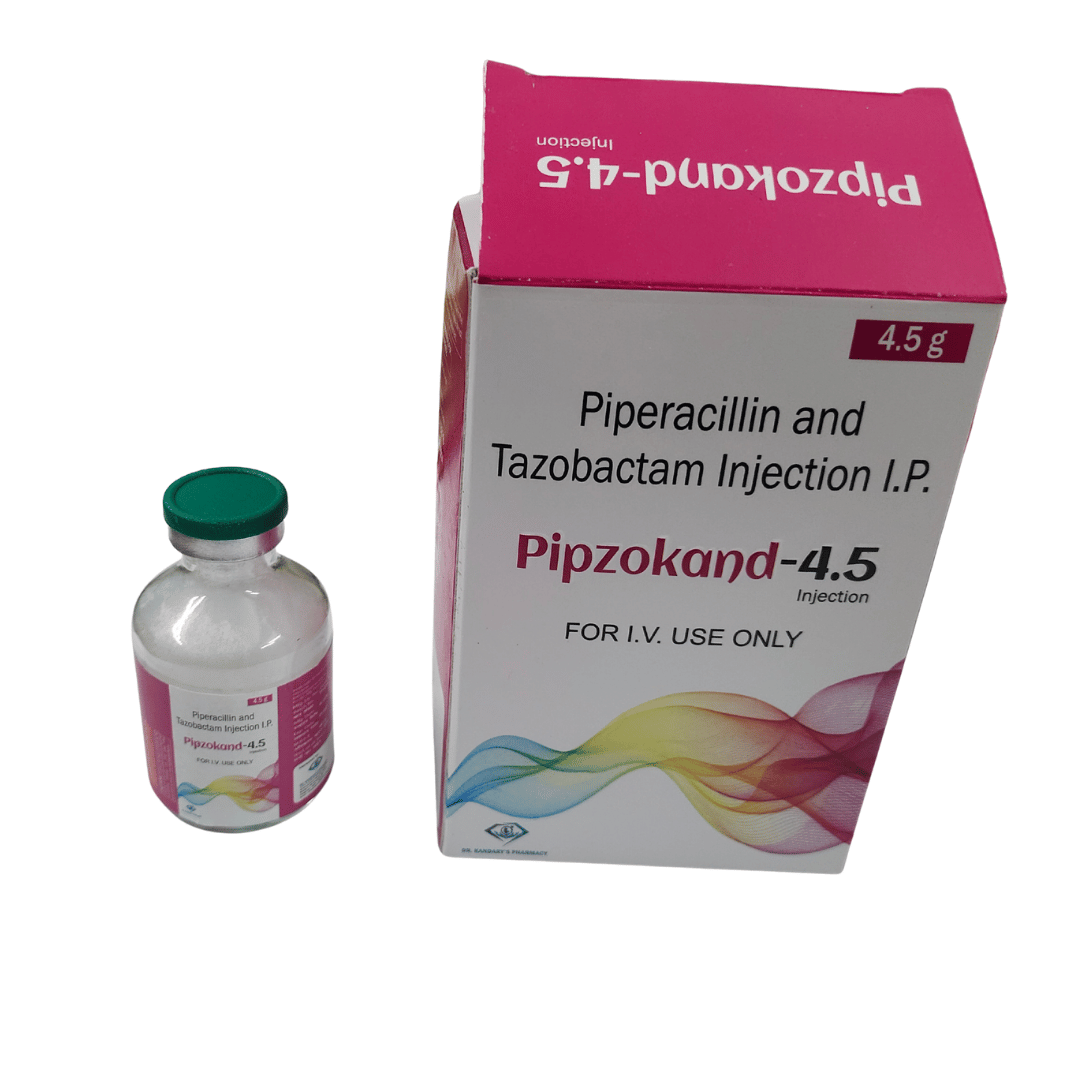
PIPZOKAND 4.5 Injection — Piperacillin 4 g + Tazobactam 0.5 g
Composition
Tazobactam: 0.5 g
Total active ingredients: 4.5 g
The composition above follows the supplied product details. Confirm the vial label and package insert for the exact formulation, approved route, and preparation instructions before administration.
Product Introduction
Piperacillin and tazobactam work together against certain bacteria. Piperacillin interferes with bacterial cell-wall formation, while tazobactam inhibits some beta-lactamase enzymes that can otherwise inactivate piperacillin.
This is a prescription antibiotic combination generally used in clinical or hospital settings for infections that require appropriate broad-spectrum antibacterial treatment. Selection depends on the suspected or confirmed infection, bacterial susceptibility, patient history, and local treatment guidance.
Uses of PIPZOKAND 4.5 Injection
Intra-Abdominal Infections
May be prescribed for selected complicated infections inside the abdomen when the likely or confirmed bacteria are susceptible to this combination.
Skin and Soft-Tissue Infections
Can be used for certain serious or complicated skin and soft-tissue infections, depending on the clinical diagnosis and the bacteria involved.
Respiratory Tract Infections
May be used for selected bacterial pneumonia cases, including certain hospital-associated infections, according to the applicable product label and clinical assessment.
Other Serious Bacterial Infections
Clinicians may consider this combination for other susceptible bacterial infections when supported by the diagnosis, culture results, and relevant treatment guidance.
Potential Benefits
Antibacterial Activity
Piperacillin targets susceptible bacteria by interfering with cell-wall formation.
Beta-Lactamase Inhibition
Tazobactam inhibits certain beta-lactamase enzymes, helping protect piperacillin against some bacterial resistance mechanisms.
Broad-Spectrum Coverage
The combination can cover a range of susceptible bacteria, including some organisms that produce beta-lactamase enzymes. It does not cover every resistant organism.
Clinician-Directed Treatment
When selected appropriately, the medicine can form part of a treatment plan for serious bacterial infections, with ongoing review of the patient's response.
Possible Side Effects
Possible Common Effects
- Diarrhoea
- Nausea or vomiting
- Skin rash or itching
- Headache
- Injection-site reactions or discomfort
Serious Reactions
- Severe allergic reactions, including anaphylaxis
- Severe or blistering skin reactions
- Severe or persistent antibiotic-associated diarrhoea
- Kidney-function changes
- Blood-cell or bleeding abnormalities, particularly with prolonged treatment
- Seizures or other neurological effects in susceptible patients, especially with impaired kidney function or excessive exposure
How to Use PIPZOKAND 4.5 Injection
- Use only when prescribed by a qualified healthcare professional for an appropriate bacterial infection.
- Administration must be performed by trained healthcare personnel using the approved product instructions.
- Confirm the route, dose, dilution, compatibility, and administration time from the actual vial label and package insert.
- The dose and dosing interval depend on the type and severity of infection, the patient's age and clinical status, and kidney function.
- Kidney impairment may require dose or interval adjustment. Do not use a generic dose schedule for every patient.
- Complete the prescribed course unless the treating clinician changes or stops treatment.
- Do not self-inject, prepare the solution at home, or use leftover antibiotics.
How Does PIPZOKAND 4.5 Work?
Piperacillin
Piperacillin is a penicillin-class antibacterial medicine. It interferes with bacterial cell-wall synthesis, weakening the cell wall and causing susceptible bacteria to die.
Tazobactam
Tazobactam inhibits certain beta-lactamase enzymes produced by bacteria. This can protect piperacillin from being broken down by those enzymes and extend activity against some susceptible organisms.
The combination is not effective against every bacterium. Culture and susceptibility results, when available, can help clinicians select or adjust antibiotic treatment.
Safety Advice and Precautions
Penicillin Allergy
Inform the treating team about previous reactions to penicillins, cephalosporins, or other beta-lactam antibiotics. A history of serious allergic reactions may make this medicine unsuitable.
Kidney Function
Tell the clinician if you have kidney disease or receive dialysis. Kidney function can affect medicine clearance and may require dose adjustment and monitoring.
Other Medicines
Provide a complete list of medicines, including anticoagulants, methotrexate, aminoglycosides, and other antibiotics. The clinical team should check for interactions and administration compatibility.
Pregnancy and Breastfeeding
Tell the treating clinician if you are pregnant, planning pregnancy, or breastfeeding so that the need for treatment and potential risks can be assessed.
Monitoring During Treatment
Depending on the patient's condition and treatment duration, the clinical team may monitor kidney function, blood counts, electrolytes, and signs of adverse reactions.
Antibiotic Resistance
Use this medicine only for an infection that is proven or strongly suspected to be bacterial and susceptible. Unnecessary use can contribute to antimicrobial resistance.
Quick Tips
- Verify the brand name, strength, vial integrity, and expiry date before preparation.
- Follow the product-specific storage and reconstitution instructions.
- Do not mix with other medicines unless compatibility has been confirmed by an authorised healthcare professional.
- Tell the clinical team promptly about a new rash, diarrhoea, breathing difficulty, or other unexpected symptoms.
- Do not save or reuse leftover injectable antibiotic solution unless the product instructions and institutional protocol specifically permit it.
- Use culture results and clinical review to guide continuation or modification of treatment whenever appropriate.






