
ORNIKAND-500 TAB
Ornidazole Tablets I.P. 500 mg
ORNIKAND-500 TAB contains ornidazole 500 mg, an antimicrobial medicine active against certain susceptible anaerobic bacteria and protozoan parasites. It may be prescribed for specific infections when the responsible organism and clinical condition make this treatment appropriate.
Ornidazole is not a general-purpose treatment for every type of diarrhoea or infection. Use it only when prescribed by a qualified healthcare professional and follow the instructions for the diagnosed condition.
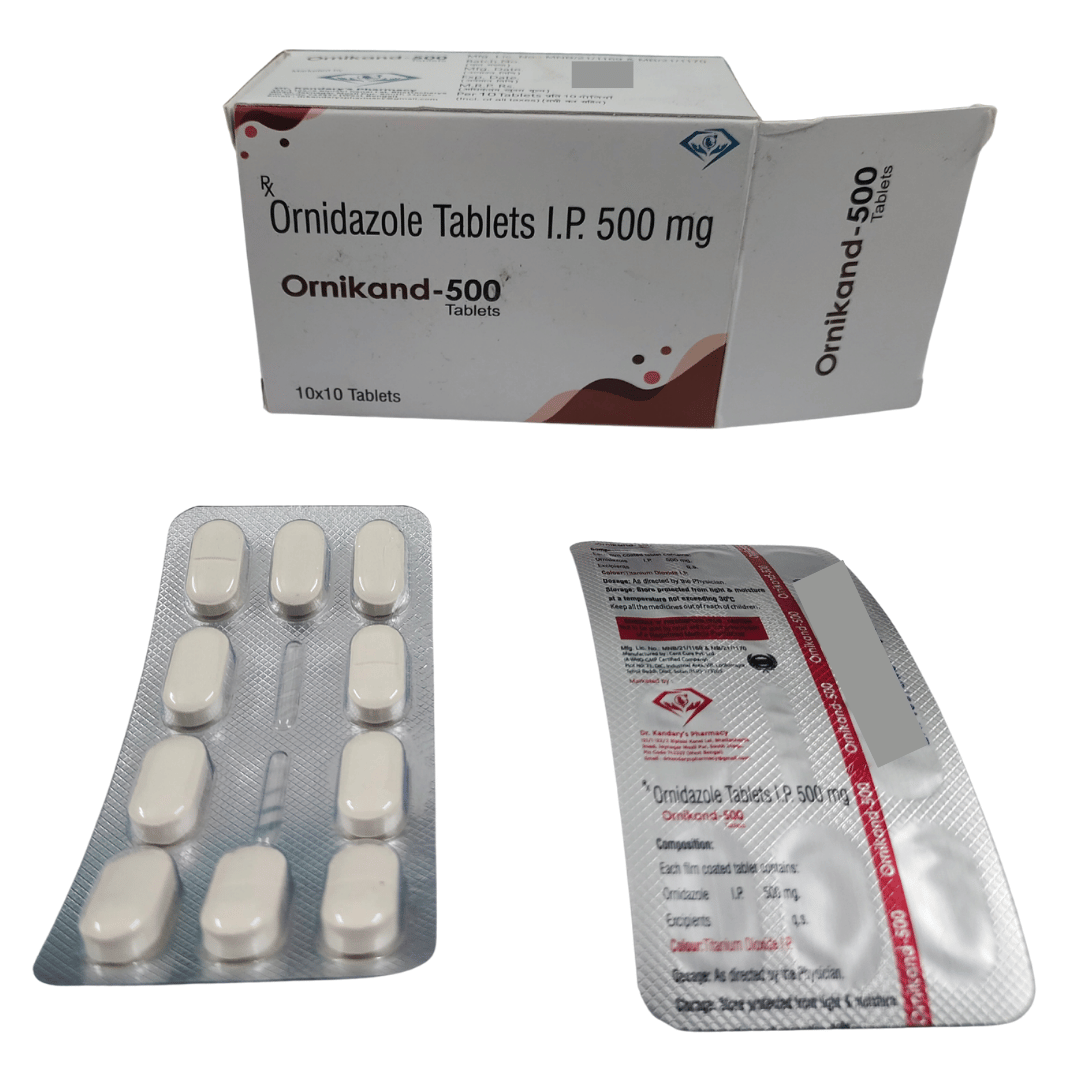
Product image for identification. Check the actual packaging for complete product details.
Composition
- Ornidazole I.P. — 500 mg: An antimicrobial agent belonging to the nitroimidazole group.
No additional active ingredients have been assumed beyond the supplied composition.
Product Introduction
Some infections are caused by protozoan parasites or anaerobic bacteria, which can grow in environments with little or no oxygen. Ornidazole acts against certain organisms in these groups and may be used for selected gastrointestinal, genital or other infections diagnosed by a clinician.
The correct treatment depends on the infection, its location, the likely or confirmed organism, the patient's medical history and any other medicines being taken. Symptoms such as diarrhoea or abdominal pain can have many causes and should not automatically be treated with ornidazole.
Uses of ORNIKAND-500 TAB
Amoebiasis
Ornidazole may be prescribed for certain infections caused by Entamoeba histolytica, including intestinal amoebiasis and selected cases of amoebic liver infection.
Giardiasis
It may be used to treat giardiasis, a parasitic infection that can cause diarrhoea, bloating, abdominal discomfort and other digestive symptoms.
Trichomoniasis
Ornidazole may be prescribed for trichomoniasis, a sexually transmitted infection caused by the protozoan Trichomonas vaginalis. Partner evaluation and treatment may be needed to prevent reinfection.
Selected Anaerobic Bacterial Infections
It may be used for certain infections involving susceptible anaerobic bacteria, depending on the site of infection and the clinician's assessment.
These are general uses associated with ornidazole. The appropriate indication and treatment regimen for ORNIKAND-500 must be confirmed by the prescribing clinician.
Potential Benefits
- Acts against certain susceptible protozoan parasites.
- May help clear specific infections when the organism is sensitive to ornidazole.
- May improve infection-related symptoms as the underlying infection responds to appropriate treatment.
- Provides a tablet formulation for prescribed oral treatment.
The benefits depend on the diagnosis and the susceptibility of the causative organism. Ornidazole does not treat all bacteria, viruses or causes of diarrhoea.
Possible Side Effects
Commonly Reported Effects
- Nausea or vomiting.
- Stomach discomfort or digestive upset.
- Unpleasant or metallic taste in the mouth.
- Headache, dizziness or tiredness.
Less Common but Serious Effects
- Allergic reactions, including swelling or difficulty breathing.
- Numbness, tingling or burning sensations in the hands or feet.
- Problems with balance, coordination or walking.
- Confusion, seizures or other significant neurological symptoms.
- Severe or persistent skin reactions.
How to Use ORNIKAND-500 TAB
- Take the tablet only as prescribed for the diagnosed infection.
- Follow the prescribed dose, frequency and duration. Different infections require different treatment regimens.
- Follow the product leaflet or pharmacist's instructions about taking the tablet with food; taking it after meals may help reduce stomach discomfort.
- Do not share the medicine with another person or use leftover tablets for a new illness.
- If you miss a dose, follow the leaflet or ask a pharmacist for advice. Do not take a double dose to make up for a missed one.
- Do not extend or repeat treatment without medical advice.
No individual dosage schedule is provided here because treatment depends on the infection, patient characteristics and clinical assessment.
How It Works
Ornidazole is reduced inside susceptible microorganisms, producing reactive compounds that damage their genetic material and interfere with essential cellular processes. This activity can prevent the organisms from surviving and multiplying.
Its activity is directed at particular protozoa and anaerobic bacteria. It does not work against viral infections such as the common cold or influenza.
Safety Advice and Precautions
Alcohol
It is prudent to avoid alcohol during treatment and follow the specific product leaflet or clinician's advice about when it is safe to drink again. Ask a pharmacist if you are unsure about alcohol-containing products.
Pregnancy and Breastfeeding
Tell your healthcare professional if you are pregnant, planning a pregnancy or breastfeeding. Ornidazole should be used in these situations only after a clinician has assessed the potential benefits and risks.
Liver Conditions
Tell your clinician if you have liver disease. Your condition may affect medicine handling and the treatment plan may need special consideration.
Nervous System Conditions
Inform your clinician about epilepsy, seizures, peripheral neuropathy or other neurological conditions. Report new numbness, tingling, confusion or balance problems promptly.
Other Medicines
Tell your doctor or pharmacist about all prescription medicines, over-the-counter products and supplements. Ornidazole may interact with certain medicines, including anticoagulants such as warfarin.
Allergy and Previous Reactions
Do not take the medicine if you have a known allergy to ornidazole or related nitroimidazole medicines unless a qualified specialist has specifically assessed the situation.
Driving and Machinery
Ornidazole may cause dizziness, drowsiness or impaired coordination in some people. Avoid driving or operating machinery if you experience these effects.
Children and Older Adults
Use in children or older adults requires appropriate clinical assessment and instructions. Do not calculate a child's dose from the adult tablet strength without professional guidance.
Quick Tips for Responsible Use
- Use ORNIKAND-500 only for the infection for which it was prescribed.
- Complete the prescribed course unless your clinician advises you to stop or change it.
- Do not use antibiotics or antiparasitic medicines without appropriate assessment.
- Maintain hand hygiene and safe food and drinking-water practices when managing gastrointestinal infections.
- Seek medical review if symptoms worsen, persist or return after treatment.
- Store the tablets according to the package instructions and keep them out of children's reach.






