
MOXIKAND Eye Drop
Moxifloxacin Ophthalmic Solution IP
MOXIKAND Eye Drop is described as an ophthalmic solution containing moxifloxacin, a fluoroquinolone antibiotic. Moxifloxacin eye drops may be prescribed to treat certain bacterial eye infections, including bacterial conjunctivitis caused by susceptible bacteria.
This medicine is intended for use in the eyes only. The exact concentration of MOXIKAND was not included in the supplied product details, so the strength should be confirmed from the bottle label or package insert before publication or use.
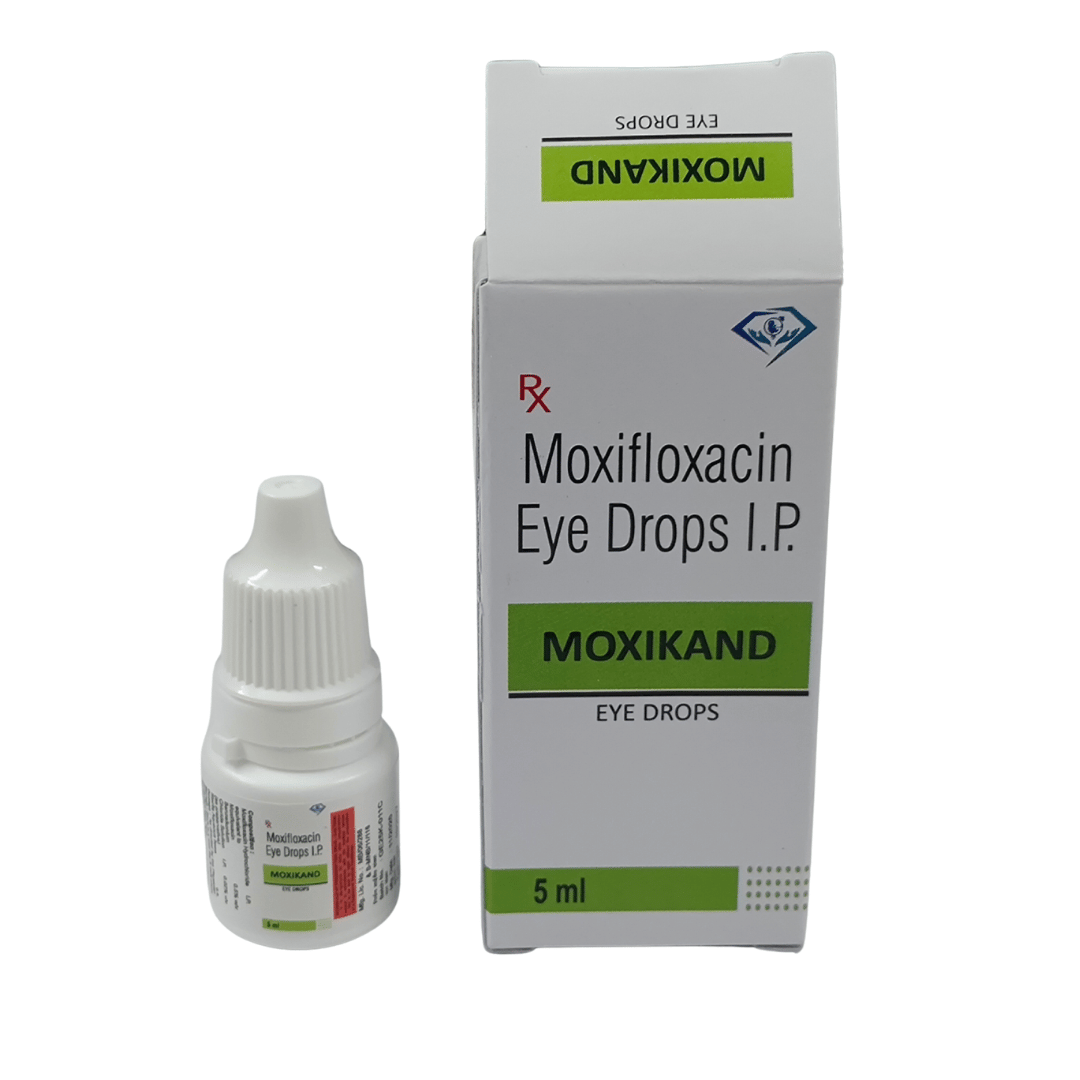
Product image for identification. Check the actual bottle and package insert for the confirmed concentration and instructions.
1. Composition
According to the supplied product information, MOXIKAND Eye Drop contains:
2. Product Introduction
Moxifloxacin is an antibiotic from the fluoroquinolone class. In ophthalmic formulations, it is applied directly to the eye to treat certain bacterial infections caused by susceptible organisms.
Redness, watering, irritation and discharge can have several causes, including viral infections, allergies and other eye conditions. An antibiotic eye drop is not suitable for every cause of red or irritated eyes, so an appropriate clinical assessment is important.
3. Uses of Medicine
Moxifloxacin ophthalmic solution may be prescribed for certain bacterial eye infections, including:
- Bacterial conjunctivitis caused by susceptible bacteria.
- Selected superficial bacterial eye infections when the clinician considers this antibiotic appropriate.
4. Benefits / Potential Benefits
When prescribed for a susceptible bacterial eye infection, moxifloxacin eye drops may:
- Help eliminate susceptible bacteria at the site of infection.
- Support improvement in infection-related discharge, redness and irritation.
- Provide local antibiotic treatment without being intended for oral or injectable use.
The response depends on the cause of the infection, bacterial susceptibility, correct use and the person's eye health. Worsening symptoms or failure to improve requires medical reassessment.
5. Possible Side Effects
Possible side effects of moxifloxacin eye drops include:
- Temporary eye irritation or discomfort.
- Burning or stinging after application.
- Dry eye, itching or redness.
- Watering or a temporary change in visual clarity.
When to seek medical help
Stop using the drops and obtain prompt medical advice if you develop signs of an allergic reaction or a significant worsening of symptoms.
Seek urgent eye care for severe eye pain, sensitivity to light, sudden changes in vision, marked swelling, injury to the eye or rapidly worsening redness. These symptoms may indicate a condition requiring urgent assessment.
6. How to Use
- Use MOXIKAND Eye Drop only as prescribed by a qualified healthcare professional.
- Follow the exact number of drops, frequency and duration on your prescription and product leaflet.
- Wash your hands before using the drops.
- Tilt your head back, gently pull down the lower eyelid and apply the prescribed drop without touching the dropper tip to your eye, fingers or any surface.
- Close the eye gently after application. If advised by your clinician, press lightly at the inner corner of the closed eye.
- Replace the cap immediately after use and do not share the bottle with anyone else.
- If you use other eye medicines, ask your clinician or pharmacist how to space them apart.
7. How It Works
Moxifloxacin blocks bacterial enzymes called DNA gyrase and topoisomerase IV. These enzymes are needed for bacteria to copy and maintain their DNA.
By interfering with these processes, moxifloxacin can kill susceptible bacteria and help control a bacterial eye infection.
It does not work against viruses or allergies. Unnecessary or prolonged antibiotic use can also encourage the growth of organisms that are not susceptible to the medicine.
8. Safety Advice
- Allergy: Tell your healthcare professional if you have had an allergic reaction to moxifloxacin, other quinolone antibiotics or any ingredient in the eye drops.
- Contact lenses: Do not wear contact lenses while you have signs or symptoms of bacterial conjunctivitis. Follow your eye-care professional's advice about when it is safe to resume wearing them.
- Eye symptoms: Severe pain, light sensitivity, injury or changes in vision require prompt assessment rather than self-treatment.
- Contamination: Never touch the dropper tip to your eye, fingers or another surface.
- Other eye medicines: Tell your clinician or pharmacist about any other drops, ointments or eye treatments you use.
- Pregnancy and breastfeeding: Ask your healthcare professional whether the medicine is appropriate for your circumstances.
- Children: Use only according to the product's age-specific instructions and a clinician's advice.
- Prolonged use: Do not extend treatment or repeatedly use leftover antibiotic drops without medical advice. Prolonged use may encourage growth of non-susceptible organisms, including fungi.
- Storage: Follow the storage instructions printed on the actual bottle or carton, and keep the drops out of children's reach.
9. Quick Tips
- Confirm the product concentration from the actual packaging.
- Use only for the condition for which the drops were prescribed.
- Wash your hands before application.
- Keep the dropper tip clean and avoid touching the eye with it.
- Do not share the bottle or use another person's eye drops.
- Avoid contact lenses while symptoms of bacterial conjunctivitis are present.
- Follow the prescribed treatment duration and storage instructions.
- Seek prompt care for severe pain, light sensitivity or changes in vision.
Important Medical Disclaimer
This page provides general educational information about MOXIKAND Eye Drop based on the supplied product description and general information about moxifloxacin ophthalmic solution. The exact concentration and product-specific instructions have not been confirmed from the manufacturer's label. Verify the formulation and approved directions before publication or use.
This information does not replace an eye examination, the official package insert or advice from a qualified healthcare professional. Do not self-treat serious eye symptoms or use antibiotic eye drops without appropriate medical guidance.






