
K1 KAND Injection
Phytomenadione Injection IP
K1 KAND Injection is listed as a phytomenadione injection. Phytomenadione, also known as vitamin K1, supports the body's production of certain blood-clotting factors. Injectable vitamin K1 may be prescribed for specific vitamin K deficiency-related clotting problems and the prevention or treatment of vitamin K deficiency bleeding in newborns, depending on the product and clinical indication.
This medicine must be used under appropriate medical supervision. The exact strength, formulation, route and dose should be confirmed from the product label and the treating healthcare professional.
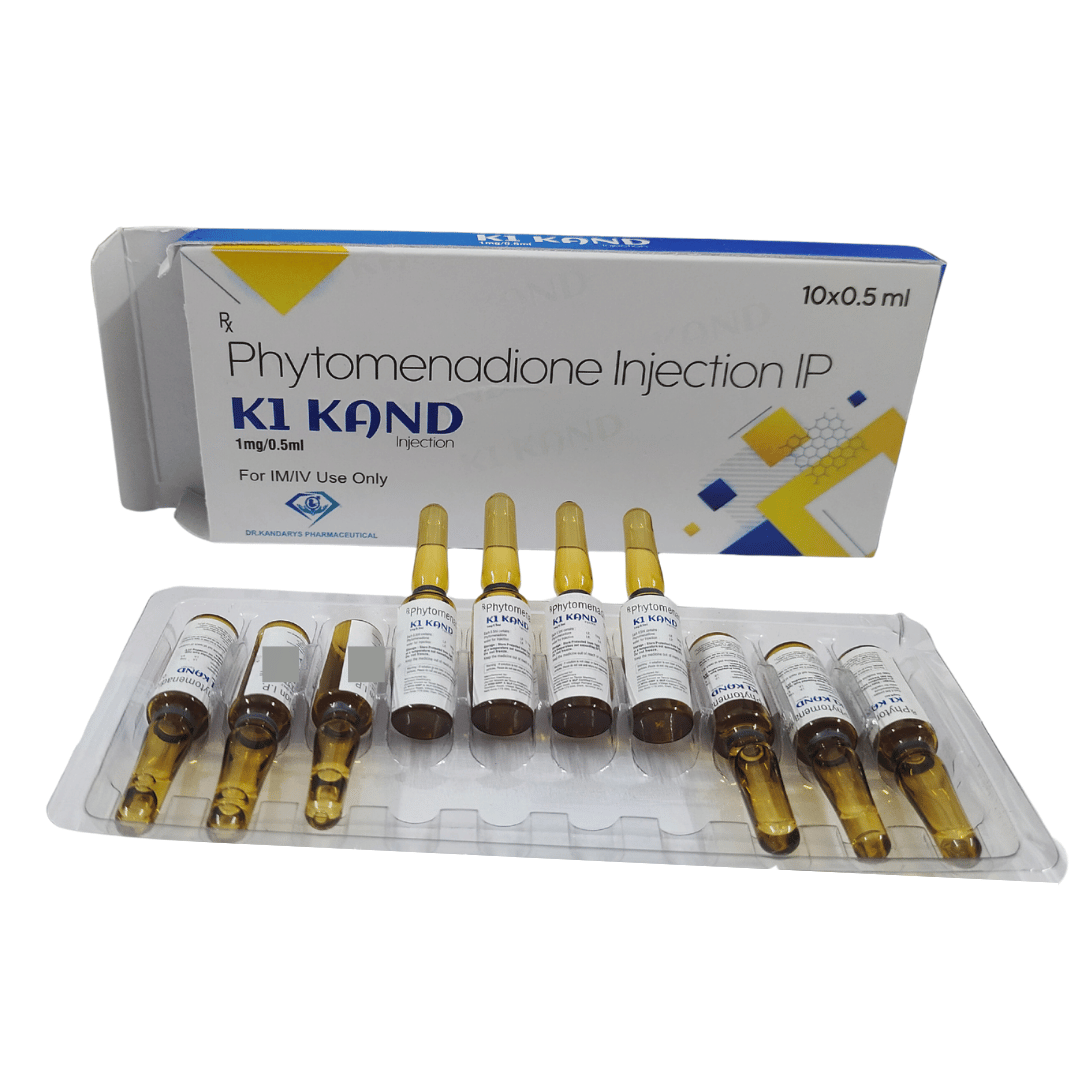
Refer to the actual product packaging and prescribing information to confirm the strength, formulation and instructions.
Composition
Listed ingredient: Phytomenadione Injection IP (Vitamin K1).
The supplied product information does not specify the concentration, total vial volume or other formulation details. Confirm these details from the actual label or package insert before use.
Product Introduction
Phytomenadione is a form of vitamin K involved in the normal production of several proteins needed for blood coagulation. Injectable preparations may be used when vitamin K replacement is medically indicated and an appropriate injectable formulation is available.
The reason for treatment, preparation, route of administration and monitoring requirements depend on the patient's age, condition and clinical assessment.
Uses of K1 KAND Injection
Depending on the exact formulation and the clinician's assessment, injectable phytomenadione may be used for:
- Prevention or treatment of vitamin K deficiency-related bleeding in newborns when indicated.
- Treatment of certain blood-clotting abnormalities caused by vitamin K deficiency.
- Correction of selected clotting problems associated with medicines that interfere with vitamin K activity, under specialist supervision.
- Selected conditions that reduce vitamin K absorption or availability, when injectable replacement is clinically appropriate.
Not every vitamin K1 product is approved or suitable for every use. The exact product label and local prescribing guidance must be followed.
Benefits / Potential Benefits
- Provides vitamin K1 when replacement is medically required.
- Supports the body's production of vitamin K-dependent clotting factors.
- May help correct certain clotting abnormalities caused by vitamin K deficiency.
- Can be used in specific newborn-care protocols to prevent vitamin K deficiency bleeding.
The effect and speed of response depend on the underlying cause, the patient's condition and the prescribed treatment plan. It is not a general-purpose treatment for every type of bleeding.
Possible Side Effects
Side effects vary by formulation and route. Report any unusual symptoms to the healthcare professional promptly.
- Pain, swelling or a reaction at the injection site.
- Flushing, sweating, dizziness or changes in blood pressure.
- Rapid heartbeat, chest discomfort or breathing difficulty.
- Skin reactions or signs of an allergic reaction.
- Rare but serious hypersensitivity reactions, including anaphylaxis, have been reported with injectable phytonadione, particularly with intravenous or intramuscular administration.
How to Use K1 KAND Injection
- Use only when prescribed or directed by an appropriately qualified healthcare professional.
- Administration must be performed by trained healthcare personnel according to the exact product instructions.
- The dose and route depend on the indication, age, clinical condition, laboratory results and labelled formulation.
- Do not self-inject, change the dose or repeat a dose without medical advice.
- Blood-clotting tests and clinical monitoring may be needed to assess the response.
The supplied information does not establish a specific strength, route or dosage for K1 KAND Injection. These details must be verified before administration.
How It Works
Vitamin K1 helps the liver produce functional forms of certain clotting proteins, including factors II, VII, IX and X, as well as proteins C and S. These proteins contribute to normal blood coagulation.
When a clotting problem is caused by vitamin K deficiency or interference with vitamin K activity, appropriate replacement may help restore clotting-factor function. It will not correct bleeding caused by every possible underlying condition.
Safety Advice
- Allergies: Tell the healthcare professional about any previous reaction to vitamin K products or formulation ingredients.
- Other medicines: Report all medicines, especially warfarin and other anticoagulants. Vitamin K can alter the effect of vitamin K-antagonist anticoagulants and requires appropriate monitoring.
- Administration risks: Injectable phytonadione can cause serious hypersensitivity reactions. Route selection and administration must follow the specific product's warnings and clinical guidance.
- Pregnancy and breastfeeding: Inform the treating clinician so that the need for treatment and formulation can be assessed.
- Newborns and children: Use only the appropriate formulation and a clinician-directed regimen.
- Monitoring: Follow recommended blood tests and clinical review. Do not adjust anticoagulant treatment independently.
Quick Tips
- Check the product name, concentration, vial volume, expiry date and packaging before use.
- Do not assume the strength from the brand name alone.
- Tell the healthcare professional about bleeding symptoms and all current medicines.
- Keep the product stored according to its own label and protect it from unsuitable storage conditions.
- Never use a damaged, contaminated or expired injection.
- Seek urgent care for uncontrolled bleeding, black stools, vomiting blood or sudden severe headache, regardless of whether vitamin K has been given.
Important Medical Disclaimer
This page is for general educational purposes only and is not a substitute for professional medical advice, diagnosis or treatment. The information provided is based on the listed composition, not a verified package insert for the specific K1 KAND product. The exact concentration, formulation, approved indications, route and dosage have not been supplied and must be confirmed from the actual packaging and official prescribing information.
Injectable phytomenadione can cause serious adverse reactions. Use only under appropriate medical supervision. Never use this information to self-prescribe or administer an injection. Consult a qualified doctor or pharmacist for product-specific guidance.






