
Medicine Information
ITRAKAND-200 Capsules
Itraconazole 200 mg Capsules
ITRAKAND-200 contains itraconazole, an antifungal medicine used to treat certain fungal infections. It works by interfering with the production of ergosterol, an essential component of fungal cell membranes, helping inhibit fungal growth.
Itraconazole is a prescription medicine with important liver, heart and drug-interaction precautions. The appropriate treatment depends on the type and location of the fungal infection, the patient's medical history and other medicines being taken.
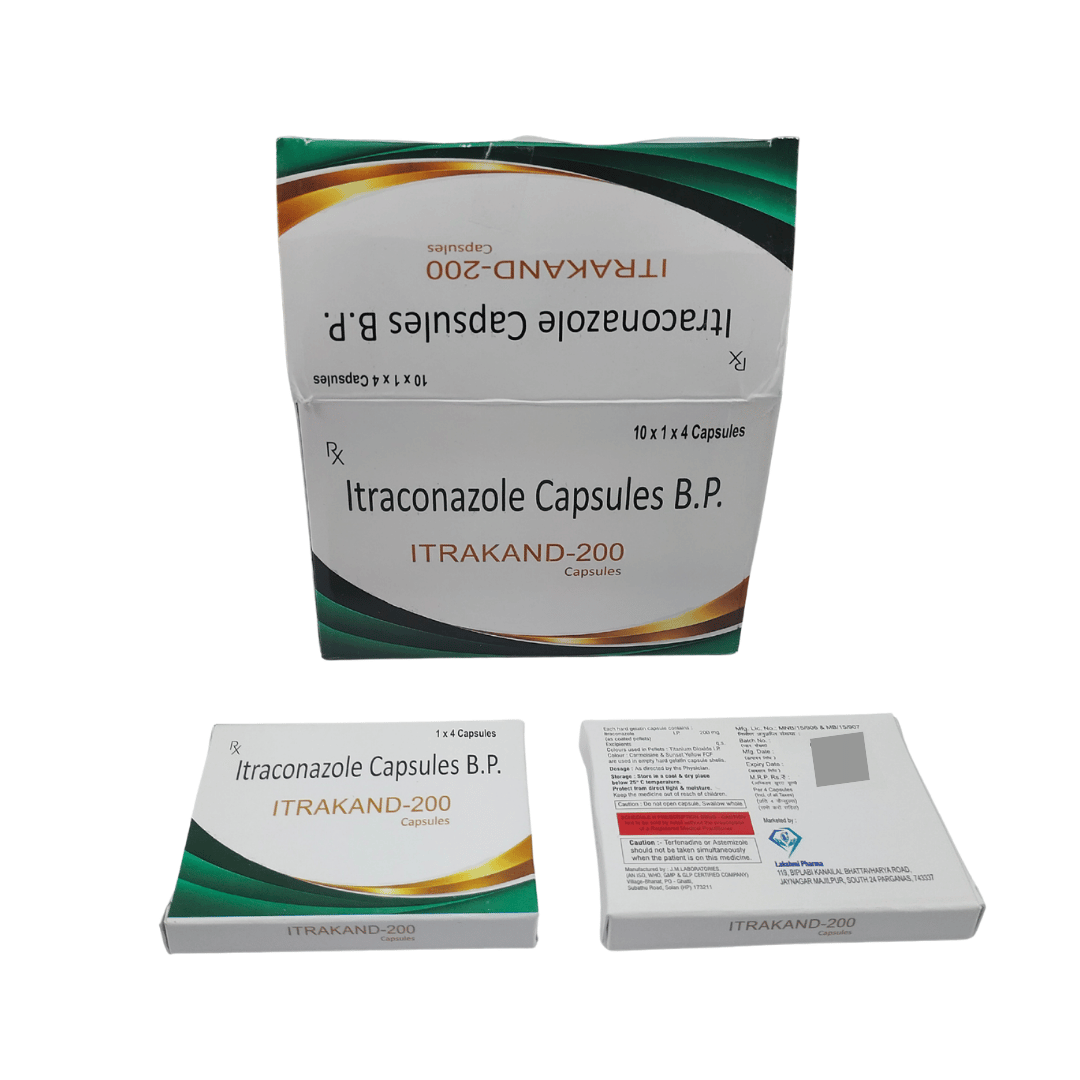
Refer to the original packaging for the complete product information and directions.
1. Composition
The supplied product information identifies the following composition:
Refer to the product label or package insert for the complete list of inactive ingredients and product-specific instructions.
2. Product Introduction
Itraconazole belongs to the triazole class of antifungal medicines. It is used for selected fungal infections affecting the skin, nails or internal organs, depending on the organism involved and the patient's clinical condition.
Not every rash, nail change or skin irritation is caused by a fungal infection. Appropriate assessment helps determine whether itraconazole is suitable and what treatment duration is required.
3. Uses of Medicine
Depending on the diagnosis and the applicable product information, itraconazole may be prescribed for certain fungal infections, including:
- Selected fungal infections of the skin.
- Some fungal nail infections when oral treatment is considered appropriate.
- Selected yeast or other fungal infections when itraconazole is an appropriate treatment option.
- Certain systemic fungal infections under specialist care.
The exact approved indications vary by product and country. The prescriber should confirm the diagnosis and choose an appropriate antifungal regimen.
4. Potential Benefits
- Antifungal action: Helps inhibit the growth of susceptible fungi.
- Treatment of selected infections: Can be effective when the fungal organism is susceptible and the medicine is appropriately prescribed.
- Oral treatment option: May be used for infections where topical treatment alone is insufficient or unsuitable.
- Systemic treatment: May be considered for certain deeper fungal infections under specialist supervision.
Results depend on the infection, organism, treatment duration, absorption and adherence to the prescribed regimen.
5. Possible Side Effects
Possible side effects include:
- Nausea, abdominal discomfort or indigestion.
- Diarrhoea or vomiting.
- Headache or dizziness.
- Changes in liver function tests.
- Swelling or other symptoms that may need medical assessment.
Serious warning signs: Seek urgent medical attention for yellowing of the skin or eyes, dark urine, severe persistent nausea, unusual fatigue, severe abdominal pain, shortness of breath, new leg swelling or sudden unexplained weight gain.
Itraconazole can rarely cause serious liver injury and can worsen heart failure in susceptible patients.
6. How to Use
- Take only as prescribed by a qualified healthcare professional.
- Follow the exact dose, timing and treatment duration specified for your infection.
- Conventional itraconazole capsules are generally taken immediately after a full meal to support absorption; follow the instructions on your specific product label.
- Swallow the capsules as directed and do not alter the formulation without professional advice.
- Medicines that reduce stomach acidity can affect absorption. Ask your doctor or pharmacist how to manage antacids or acid-reducing medicines.
- Do not double a missed dose or extend treatment without medical advice.
No individual dose or duration is provided here because the correct regimen depends on the type of fungal infection and the patient's circumstances.
7. How It Works
Itraconazole inhibits a fungal enzyme involved in producing ergosterol, a key component of fungal cell membranes.
- Reduced ergosterol production disrupts the normal structure and function of fungal cell membranes.
- This interferes with fungal growth and survival.
- The medicine acts against susceptible fungi, but it does not treat bacterial or viral infections.
Completing the prescribed course and following up when recommended helps the clinician assess the treatment response.
8. Safety Advice
- Liver health: Tell your doctor about liver disease or previous liver problems. Seek prompt medical advice if symptoms of liver injury develop.
- Heart conditions: Inform your clinician about heart failure or other heart problems. Itraconazole can worsen heart failure and may be unsuitable for some patients.
- Drug interactions: Itraconazole interacts with many medicines, including certain cholesterol-lowering medicines, sedatives, heart medicines and other drugs. Provide a complete list of prescription medicines, non-prescription products and supplements.
- Pregnancy: Tell your doctor if you are pregnant, planning pregnancy or breastfeeding. The risks and benefits must be assessed for the specific indication.
- Stomach acidity: Some acid-reducing medicines can lower itraconazole capsule absorption.
- Allergies: Tell your healthcare professional about previous reactions to itraconazole or related medicines.
- Monitoring: Your clinician may recommend liver-function tests or other monitoring depending on the treatment and risk factors.
9. Quick Tips
- Use itraconazole only for the condition for which it was prescribed.
- Follow the product-specific instructions about meals and administration.
- Do not share the medicine with another person.
- Tell your doctor or pharmacist before starting any new medicine.
- Store the capsules according to the original packaging instructions.
- Keep the medicine out of children's reach and do not use it after expiry.
- Complete the prescribed treatment and attend recommended follow-up appointments.
- Seek medical attention promptly if symptoms worsen or serious warning signs appear.
Important Medical Disclaimer
This page provides general educational information and is not a substitute for professional medical advice, diagnosis or treatment. ITRAKAND-200 contains itraconazole, a prescription antifungal medicine with potentially serious liver, heart and drug-interaction risks. Confirm the exact product instructions with the original packaging and consult a qualified healthcare professional before use. Do not start, stop or change treatment without medical advice.






