
Medicine Information
FERRIKAND Injection
Ferric Carboxymaltose Injection 500 mg/10 mL
FERRIKAND Injection contains ferric carboxymaltose, an intravenous iron replacement medicine used when iron treatment is medically indicated. It helps replenish the body's iron stores and supports haemoglobin production when iron deficiency has been established.
This medicine is administered into a vein by trained healthcare professionals. The dose and treatment schedule must be determined by the prescriber after assessing iron status, body weight, medical history and the product's official instructions.
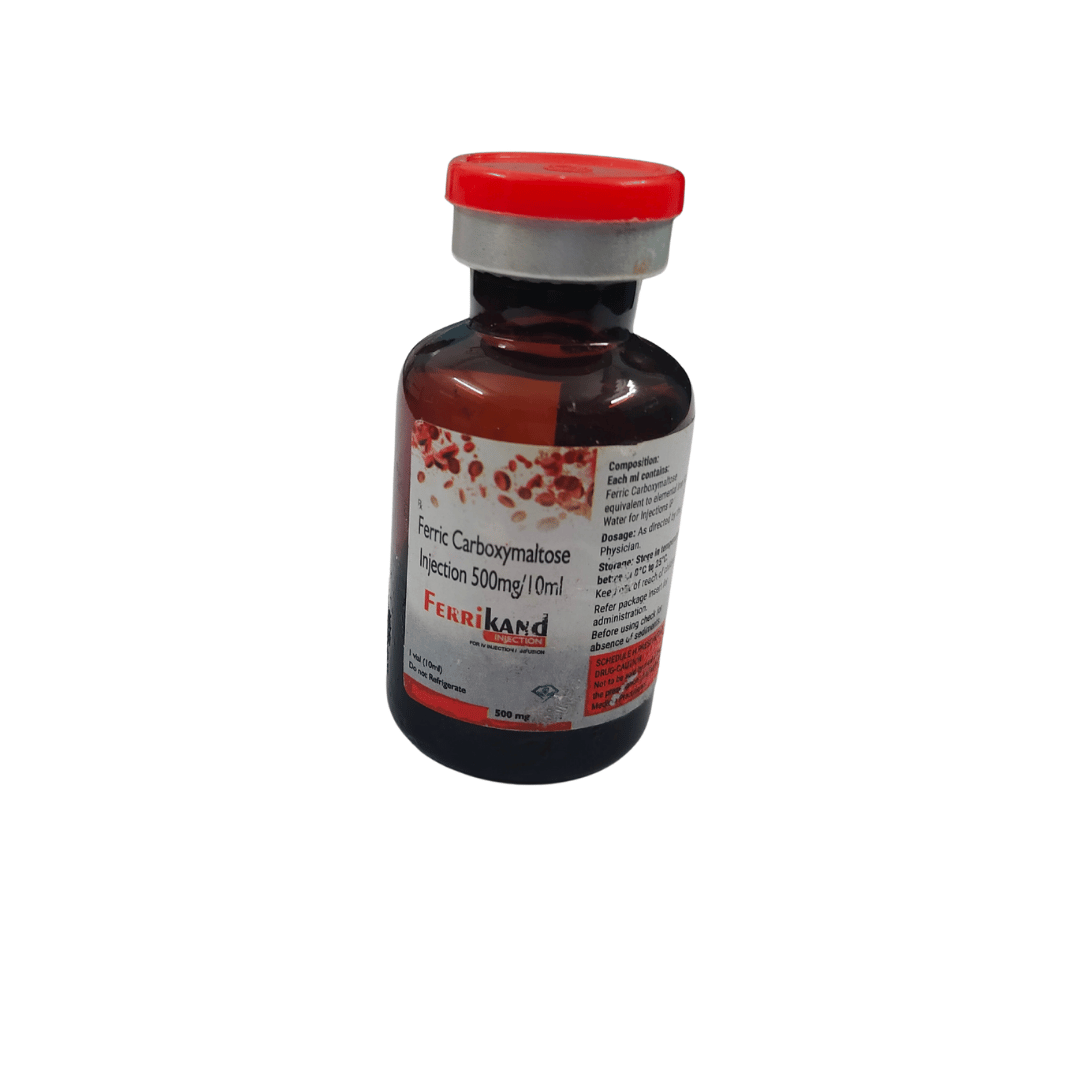
Refer to the original product packaging and prescribing information for complete instructions.
1. Composition
Each 10 mL presentation is labelled as containing:
Check the product label for the complete formulation, iron content declaration, excipients, storage conditions and administration instructions.
2. Product Introduction
Ferric carboxymaltose is an iron replacement preparation intended for intravenous administration. A clinician may consider intravenous iron when iron deficiency requires treatment and oral iron is unsuitable, not tolerated or has not worked adequately, or when another approved clinical indication applies.
Before treatment, the healthcare professional evaluates whether iron deficiency is present and whether intravenous iron is appropriate. Not every type of anaemia is caused by iron deficiency.
3. Uses of Medicine
When prescribed following appropriate assessment, ferric carboxymaltose may be used to:
- Treat confirmed iron deficiency in appropriate patients.
- Replenish iron stores when oral iron is not tolerated or has not provided an adequate response.
- Manage iron deficiency in selected patients with certain chronic conditions, where supported by the applicable product label and clinical guidance.
- Support recovery of haemoglobin levels when iron deficiency is contributing to anaemia.
The approved indications can differ by country and product. The prescriber should follow the locally applicable product information.
4. Potential Benefits
- Iron replacement: Provides iron needed for the body's normal functions.
- Haemoglobin production: Helps provide iron required to produce haemoglobin in red blood cells.
- Replenishment of iron stores: Can help restore iron levels when a suitable treatment course is prescribed.
- Alternative to oral iron: May be useful for patients for whom oral iron is unsuitable or insufficient, depending on the clinical situation.
Improvement in symptoms and laboratory results varies by patient and depends on the cause and severity of iron deficiency, the prescribed treatment and response to therapy.
5. Possible Side Effects
Possible adverse effects include:
- Nausea or vomiting.
- Headache or dizziness.
- Flushing or changes in blood pressure.
- Injection-site discomfort or reactions.
- Temporary changes in phosphate levels in the blood.
Serious reactions: Severe allergic or hypersensitivity reactions can occur. Breathing difficulty, wheezing, facial or throat swelling, collapse or severe dizziness require immediate medical attention.
Ferric carboxymaltose can also cause low blood phosphate levels, sometimes severe or prolonged. This can cause unusual fatigue, muscle weakness or pain, and in serious cases bone complications. Tell your clinician if these symptoms develop.
6. How to Use
- Use only when prescribed by a qualified healthcare professional.
- The medicine is given intravenously by trained medical personnel according to the official product instructions.
- The required amount and treatment schedule depend on the patient's iron status, body weight, clinical needs and applicable prescribing information.
- Do not self-inject or attempt to administer the medicine at home without an authorised clinical service and appropriate medical supervision.
- Patients should be observed during administration and for at least 30 minutes afterwards, and until clinically stable, according to applicable product instructions.
Do not use the labelled 500 mg/10 mL presentation as an individual dosing instruction. The prescribed dose and method must be confirmed by the treating clinician.
7. How It Works
Ferric carboxymaltose is an iron-carbohydrate complex designed to deliver iron for use by the body.
- After administration, iron becomes available for normal iron-handling and storage pathways.
- The body uses iron to produce haemoglobin, the protein in red blood cells that carries oxygen.
- Replenishing iron can support red blood cell production when iron deficiency is the cause of low iron stores or iron-deficiency anaemia.
It does not treat every cause of anaemia, so the underlying diagnosis and laboratory findings are important.
8. Safety Advice
- Allergy: Tell the clinician about previous reactions to ferric carboxymaltose or any intravenous iron product.
- Phosphate levels: Tell the clinician about previous low phosphate, vitamin D deficiency, malabsorption, inflammatory bowel disease or other relevant risk factors. Monitoring may be needed, especially for at-risk patients and repeat treatment courses.
- Blood pressure: Blood pressure may rise temporarily; clinical monitoring is important.
- Pregnancy: Inform the prescriber if you are pregnant, planning pregnancy or breastfeeding. Treatment requires an individual risk-benefit assessment.
- Other iron treatment: Tell the clinician about oral iron, other intravenous iron products and all medicines or supplements you take.
- Correct diagnosis: Iron studies and other investigations may be required to confirm deficiency and assess the response to treatment.
- Observation: Administration must occur where trained personnel and emergency treatment for serious hypersensitivity reactions are available.
9. Quick Tips
- Keep laboratory reports and follow-up appointments available for your treating clinician.
- Attend recommended blood tests to assess treatment response and determine whether further treatment is needed.
- Report new muscle weakness, unusual fatigue, bone pain or other persistent symptoms after treatment.
- Do not repeat a course unless your clinician has reassessed your needs.
- Store and handle the medicine according to the original product label.
- Do not use a vial if it is expired, damaged or does not meet the product's inspection requirements.
- Seek urgent medical assistance for signs of a serious allergic reaction.
Important Medical Disclaimer
This page provides general educational information and is not a substitute for professional medical advice, diagnosis or treatment. FERRIKAND Injection must be prescribed and administered by qualified healthcare professionals. Confirm the full composition, approved indications, dose, administration method and storage instructions from the original package insert and applicable local prescribing information. Never self-administer intravenous iron.






