
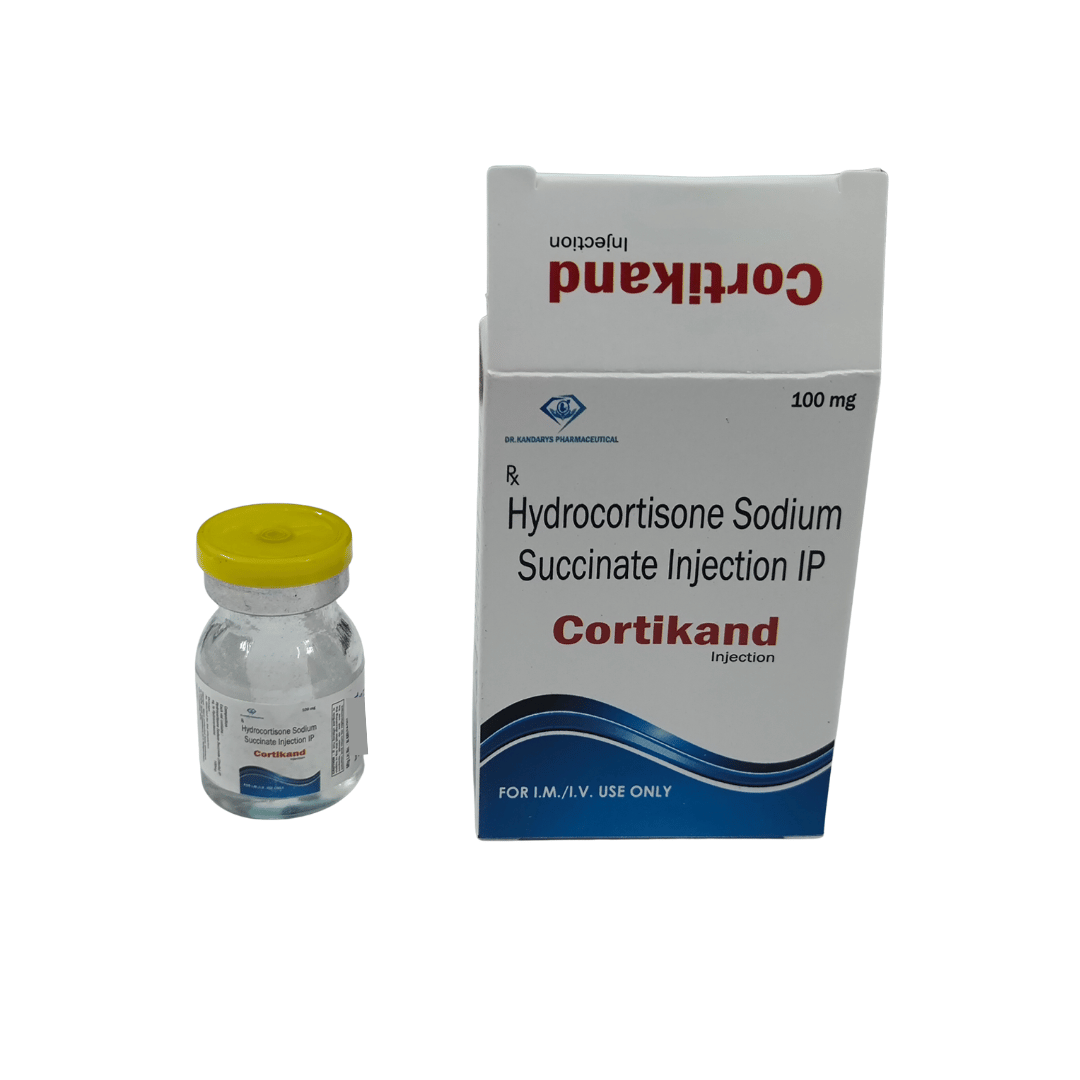
CORTIKAND-100 Injection
CORTIKAND-100 Injection contains hydrocortisone sodium succinate, a corticosteroid medicine with anti-inflammatory and immunosuppressive effects. Injectable hydrocortisone may be used in hospital or other supervised clinical settings when rapid corticosteroid treatment is needed or oral treatment is not suitable.
Depending on the clinical situation, hydrocortisone may be used for adrenal insufficiency, severe allergic or inflammatory conditions, and other specific indications. The diagnosis, patient's condition and official product information determine whether it is appropriate.
Composition
Active ingredient: Hydrocortisone Sodium Succinate I.P. 100 mg.
Medicine class: Corticosteroid (glucocorticoid).
The supplied product information states 100 mg. Confirm whether the labelled strength refers to hydrocortisone equivalent per vial and check the manufacturer's instructions for reconstitution and administration before use.
1. Product Introduction
Hydrocortisone is a corticosteroid that resembles a naturally occurring hormone produced by the adrenal glands. It helps regulate inflammation, immune responses and the body's response to physical stress.
The sodium succinate formulation is designed for injection after preparation according to the product instructions. It is used when a clinician determines that injectable hydrocortisone is needed.
2. Uses of Medicine
Depending on the approved product information and clinical assessment, hydrocortisone sodium succinate injection may be used for:
- Adrenal insufficiency, including situations requiring urgent steroid replacement.
- Selected severe allergic or inflammatory conditions when corticosteroid treatment is indicated.
- Specific acute asthma or other respiratory inflammatory situations as part of a clinician-directed treatment plan.
- Selected rheumatic, dermatologic or other inflammatory disorders.
- Other approved conditions when oral treatment is not feasible or rapid treatment is clinically required.
It is not a substitute for emergency treatment that may also be required, such as adrenaline for anaphylaxis.
3. Potential Benefits
- Helps reduce excessive inflammatory and immune responses in appropriate conditions.
- Provides corticosteroid replacement when the body does not produce sufficient cortisol.
- Offers an injectable option when oral treatment is unsuitable.
- May help stabilize certain acute conditions when used as part of an appropriate treatment plan.
The response depends on the diagnosis, severity, timing, dose and other treatments being given. It should be used only when the expected benefit outweighs the risks.
4. Possible Side Effects
Possible adverse effects include:
- Increased blood glucose levels.
- Raised blood pressure, fluid retention or changes in potassium levels.
- Stomach irritation, nausea or mood and sleep changes.
- Increased susceptibility to infection or worsening of an existing infection.
- Changes in mood, agitation or other psychological effects.
- With repeated or prolonged treatment, adrenal suppression, muscle weakness, skin changes and reduced bone strength.
Seek urgent medical care for severe allergic symptoms, serious breathing difficulty, confusion, signs of a severe infection or other rapidly worsening symptoms.
5. How to Use
- Use only under the direction of a qualified healthcare professional.
- The clinician must select the dose and frequency based on the condition, severity and response to treatment.
- Reconstitute and administer only according to the specific manufacturer's instructions.
- Confirm the permitted route on the vial and package insert before administration.
- Do not self-inject or attempt to prepare the medicine at home.
No individual dosing schedule or reconstitution volume is provided here. Injectable hydrocortisone products must not be administered intrathecally, and epidural use is not an approved route.
6. How It Works
Hydrocortisone binds to glucocorticoid receptors and changes the activity of genes involved in inflammation and immune responses. This reduces the production and activity of several inflammatory mediators.
It also has physiological glucocorticoid effects important for maintaining blood pressure, metabolism and the body's response to stress in people with adrenal insufficiency.
7. Safety Advice
- Infections: Tell the clinician about current infections, exposure to serious infections or a history of tuberculosis. Corticosteroids may mask infection symptoms or worsen some infections.
- Diabetes: Hydrocortisone can raise blood glucose; monitoring may be needed.
- Blood pressure and heart conditions: Tell the clinician about hypertension, heart failure, kidney disease or fluid retention.
- Other medicines: Report all medicines, including anticoagulants, diabetes medicines, diuretics, anti-inflammatory medicines and drugs that affect steroid metabolism.
- Allergies: Inform the healthcare team about any previous reaction to hydrocortisone or product ingredients.
- Prolonged treatment: Do not stop long-term corticosteroid treatment suddenly without medical guidance; gradual reduction may be required.
- Pregnancy or breastfeeding: Use only after an appropriate clinician evaluates the benefits and risks.
8. Quick Tips
- Verify the product name, strength, expiry date and vial integrity.
- Follow the exact reconstitution and storage instructions on the product label.
- Tell the treating team about diabetes, infections and other medical conditions.
- Do not use the injection for self-treatment of allergic or inflammatory symptoms.
- Attend recommended monitoring if repeated or prolonged corticosteroid treatment is required.
- Keep the product stored according to the manufacturer's instructions.
Important Steroid Safety Warning
Hydrocortisone can suppress immune responses, raise blood glucose and affect fluid and electrolyte balance. Injectable corticosteroids require professional assessment and correct administration. Never administer this preparation by an unapproved route, and verify the exact product-specific instructions before use.
This page is intended for general educational and product-information purposes only. It does not replace professional medical advice, diagnosis, treatment or the official manufacturer's package insert. Do not use this information to determine an individual dose or administer an injection. Verify the product's approved indications, strength, reconstitution directions and route before publication or clinical use.






