
CLOTKAND-500 Injection
CLOTKAND-500 Injection is listed as a tranexamic acid preparation containing benzyl alcohol. Tranexamic acid is an antifibrinolytic medicine that helps reduce bleeding by slowing the breakdown of blood clots.
Tranexamic acid may be used in specific clinical situations involving excessive bleeding when a healthcare professional determines that treatment is appropriate. The indication, route and administration instructions must be confirmed from the approved product information.
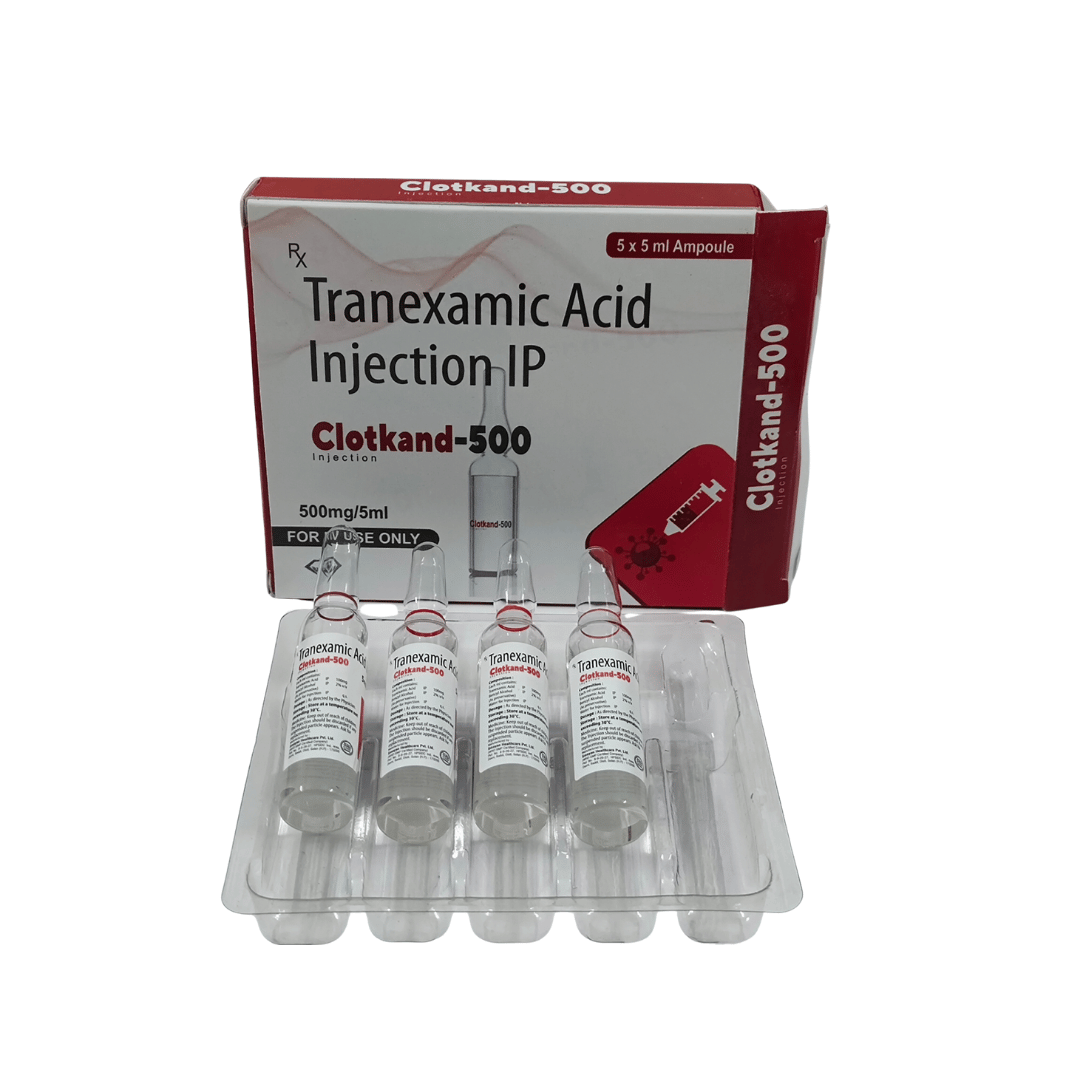
Composition
Tranexamic Acid: 500 mg.
Benzyl Alcohol I.P.: 2% v/v.
Medicine class: Antifibrinolytic agent.
The supplied information does not state the total volume of the injection or whether the 500 mg strength is per ampoule, vial or specified volume. Confirm these details and the exact approved route against the manufacturer's label before publication or use.
1. Product Introduction
Tranexamic acid helps preserve blood clots by inhibiting the activation of plasminogen and the breakdown of fibrin. This can reduce bleeding in selected clinical circumstances.
CLOTKAND-500 is an injectable medicine and must be used only under qualified medical supervision. The specific product's label is essential for confirming its formulation and administration method.
2. Uses of Medicine
Depending on the approved product information and clinical assessment, tranexamic acid may be used to help control or reduce bleeding in selected situations, such as:
- Some surgical procedures associated with significant bleeding risk.
- Selected bleeding conditions where antifibrinolytic treatment is indicated.
- Other approved clinical indications determined by the treating clinician.
The appropriate use depends on the cause of bleeding, the patient's condition and the applicable treatment protocol. Not all bleeding requires tranexamic acid.
3. Potential Benefits
- Helps reduce the breakdown of fibrin blood clots.
- May reduce bleeding in appropriate clinical situations.
- Can be part of a clinician-directed bleeding management plan.
- May help reduce blood loss in certain approved surgical settings.
The outcome depends on the cause and severity of bleeding, the patient's medical history and timely treatment. Tranexamic acid does not replace urgent assessment or other necessary bleeding control.
4. Possible Side Effects
Possible adverse effects of tranexamic acid may include:
- Nausea or vomiting.
- Diarrhoea or abdominal discomfort.
- Dizziness or light-headedness.
- Low blood pressure, particularly with inappropriate or rapid administration of some injectable formulations.
- Allergic reactions, including rash or itching.
- Rare but serious blood clots, seizures or visual disturbances.
Seek urgent medical attention for sudden chest pain, breathlessness, one-sided leg swelling, sudden weakness, severe allergic symptoms, seizures or sudden changes in vision.
5. How to Use
- Use only when prescribed and administered by a qualified healthcare professional.
- Confirm the product's approved route and administration instructions from its own package insert.
- Do not self-inject or attempt to prepare or administer the medicine at home.
- The clinician must determine the appropriate dose and timing based on the indication and patient-specific factors.
- Check the product name, strength, expiry date and packaging before administration.
Do not assume a route or administration rate from the brand name alone. Tranexamic acid injectable products intended for intravenous use must never be administered into the spinal or epidural space.
6. How It Works
Tranexamic acid is a synthetic lysine analogue. It binds to plasminogen-related sites and inhibits the processes involved in fibrin breakdown, helping clots remain intact for longer.
Its action is antifibrinolytic rather than a direct stimulation of blood clot formation. It is not appropriate for every type of bleeding and may be unsuitable for people with certain clotting risks.
7. Safety Advice
- Blood clots: Tell the clinician about any history of deep-vein thrombosis, pulmonary embolism, stroke or other clotting problems.
- Active clotting: Tranexamic acid is contraindicated in active intravascular clotting according to standard prescribing information.
- Kidney disease: The medicine may require dose adjustment because tranexamic acid is primarily eliminated through the kidneys.
- Seizure history: Inform the treating clinician about previous seizures.
- Other medicines: Report hormonal contraceptives and medicines that may increase clotting risk.
- Allergy: Tell the clinician about any previous reaction to tranexamic acid or any listed ingredient.
- Benzyl alcohol: The supplied composition lists benzyl alcohol 2% v/v. Confirm the formulation's warnings and suitability for the intended patient, especially neonates and young infants.
8. Quick Tips
- Use only under medical supervision for an appropriate indication.
- Confirm the labelled concentration, total volume and route before use.
- Inform the healthcare team about kidney disease, clotting history and seizure history.
- Do not use the injection if the packaging is damaged or the product appears abnormal.
- Never administer tranexamic acid by an unapproved route.
- Seek urgent care for symptoms that may indicate a blood clot or severe allergic reaction.
- Follow the manufacturer's storage instructions.
Important Injection Safety Warning
Tranexamic acid can increase the risk of thromboembolic complications in susceptible patients. Incorrect administration routes have also caused severe, potentially fatal reactions. The medicine must be administered by qualified healthcare professionals after checking the product label, contraindications, kidney function and clinical indication.
This page is intended for general educational and product-information purposes only. It does not replace professional medical advice, diagnosis, treatment or the official manufacturer's package insert. The composition shown reflects the supplied product details. Verify the exact strength basis, total volume, approved route and all formulation-specific warnings before publication or clinical use.






