
DICLOKAND 75 Injection
Diclofenac Sodium 75 mg/1 mL
DICLOKAND 75 Injection contains diclofenac sodium, a non-steroidal anti-inflammatory drug (NSAID) used under medical supervision to relieve pain and reduce inflammation in appropriate clinical situations. It may be considered when an injectable form is clinically appropriate.
Diclofenac helps reduce pain and inflammatory symptoms, but it does not treat every underlying cause of pain. The need for an injection, the appropriate route and the duration of treatment must be decided by a qualified healthcare professional.
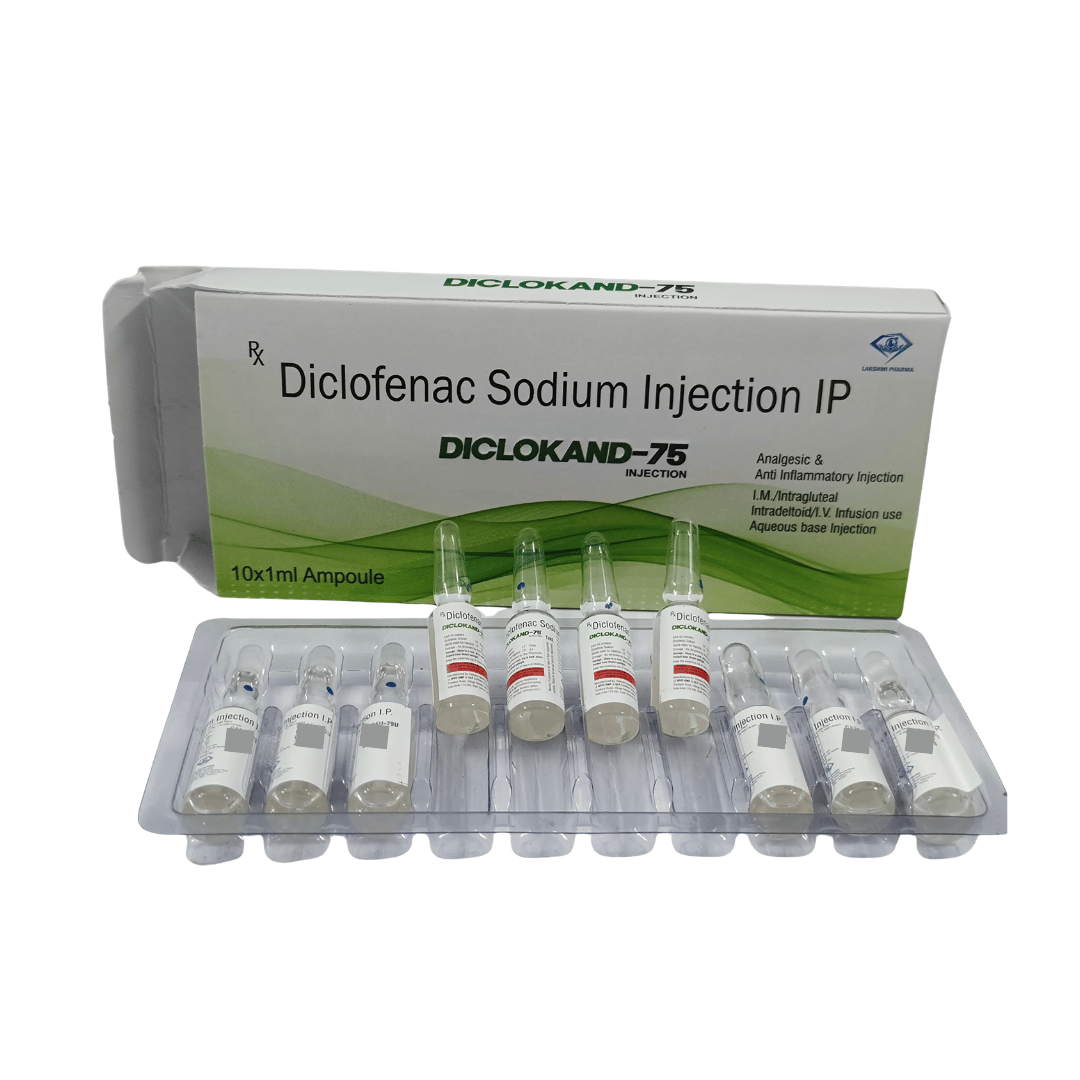
Product image for identification. Always check the actual packaging, label, expiry date and package insert before use.
1. Composition
Active ingredient: Diclofenac Sodium
Labelled strength supplied: 75 mg/1 mL
Dosage form: Injection
2. Product Introduction
DICLOKAND 75 Injection is a diclofenac sodium formulation used for selected painful and inflammatory conditions when a clinician considers injectable treatment appropriate. Diclofenac belongs to the NSAID group of medicines.
It works by reducing the production of prostaglandins, substances involved in pain, inflammation and fever. Treatment should use the lowest effective dose for the shortest appropriate duration, as determined by the treating clinician.
Injectable diclofenac is not suitable for self-administration. Product-specific instructions must be followed because injection routes and administration requirements vary by formulation.
3. Uses of Medicine
Depending on the clinical assessment and approved product instructions, diclofenac may be used for short-term relief of selected painful and inflammatory conditions, such as:
- Acute musculoskeletal pain and inflammation.
- Pain associated with certain joint or soft-tissue conditions.
- Selected postoperative or other acute pain when an injectable NSAID is appropriate.
- Other approved painful inflammatory conditions as assessed by a clinician.
The suitability of an injection depends on the patient's diagnosis, medical history, other medicines and the product's approved indications.
4. Benefits
- Helps reduce pain associated with selected inflammatory conditions.
- Can reduce inflammation and swelling related to appropriate conditions.
- May improve comfort and movement when pain and inflammation are controlled.
- Provides an injectable option when a clinician determines that this route is appropriate.
The response varies between individuals. Pain relief does not necessarily mean that the underlying condition has healed.
5. Possible Side Effects
Possible side effects may include:
- Nausea, vomiting or indigestion.
- Abdominal discomfort or stomach pain.
- Dizziness or headache.
- Injection-site pain or local reactions, depending on the formulation and route.
- Fluid retention or swelling.
Serious side effects requiring urgent medical attention
- Black stools, vomiting blood or severe abdominal pain, which may indicate gastrointestinal bleeding.
- Chest pain, sudden breathlessness, weakness on one side or difficulty speaking.
- Reduced urine output or other signs of significant kidney problems.
- Facial or throat swelling, severe rash or difficulty breathing.
- Yellowing of the skin or eyes, which may indicate liver injury.
Seek urgent medical care if serious symptoms develop. This is not a complete list of possible adverse reactions.
6. How to Use
- Use only when prescribed or authorised by a qualified healthcare professional.
- The injection must be administered by trained healthcare personnel according to the specific product instructions.
- The route, dose, frequency and duration must be determined by the clinician.
- Check the label, packaging integrity, expiry date and appearance before administration.
- Do not self-inject, reuse needles or share injection equipment.
- Do not combine this medicine with other painkillers without checking with the treating clinician.
The listed strength is 75 mg/1 mL. It does not by itself establish the appropriate dose or route for an individual patient.
7. How It Works
Diclofenac inhibits cyclo-oxygenase (COX) enzymes involved in prostaglandin production. Prostaglandins contribute to pain, inflammation and fever.
By reducing prostaglandin production, diclofenac can help decrease pain and inflammatory symptoms. However, prostaglandins also help protect the stomach lining and support kidney blood flow, which helps explain some of the medicine's important risks.
Diclofenac provides symptom relief; it is not an antibiotic and does not directly eliminate an infection.
8. Safety Advice
- Stomach and intestines: Tell the clinician about previous ulcers, gastrointestinal bleeding or severe digestive problems.
- Heart and circulation: Discuss heart disease, previous stroke, high blood pressure or heart failure before treatment.
- Kidneys: Tell the clinician about kidney disease, dehydration or reduced urine output.
- Liver: Disclose liver disease or previous medicine-related liver problems.
- Allergy and asthma: Report reactions to diclofenac, aspirin or other NSAIDs, especially asthma or swelling triggered by these medicines.
- Pregnancy: Diclofenac can pose risks during pregnancy, particularly from around 20 weeks onward, and should generally be avoided from 30 weeks onward. A clinician must assess any use during pregnancy.
- Breastfeeding: Seek individual advice before use.
- Other medicines: Report blood thinners, antiplatelet medicines, steroids, other NSAIDs, diuretics, blood-pressure medicines, lithium or methotrexate.
Do not use diclofenac alongside ibuprofen, naproxen or another NSAID unless specifically instructed by a healthcare professional.
9. Quick Tips
- Keep the medicine in its original packaging and follow the manufacturer's storage instructions.
- Never use an expired, damaged or improperly stored injection.
- Tell healthcare personnel about all medicines, supplements and known allergies before administration.
- Use only for the condition and duration advised by the treating clinician.
- Do not request repeated injections for persistent pain without reassessment of the underlying cause.
- Seek immediate medical attention for signs of gastrointestinal bleeding, a serious allergic reaction, chest pain or stroke.
Important Medical Disclaimer
This page provides general educational information about DICLOKAND 75 Injection based on the supplied product composition and general diclofenac safety information. It is not a substitute for the manufacturer's package insert, a prescription or professional medical advice.
Diclofenac can cause serious gastrointestinal bleeding, cardiovascular events, kidney injury and allergic reactions in some patients. Suitability, dose, route and duration must be determined by a qualified healthcare professional after reviewing the patient's condition and medical history.
Always verify the exact product label and approved administration instructions before use. Do not self-administer this injection.






