
CLOTKAND-500 Tablet
CLOTKAND-500 Tablet contains tranexamic acid, an antifibrinolytic medicine that helps reduce bleeding by slowing the breakdown of blood clots. It may be prescribed for certain bleeding conditions when a healthcare professional determines that treatment is appropriate.
The medicine is used for specific clinical indications rather than for every type of bleeding. The cause of bleeding, medical history, kidney function and risk of blood clots should be assessed before treatment is selected.
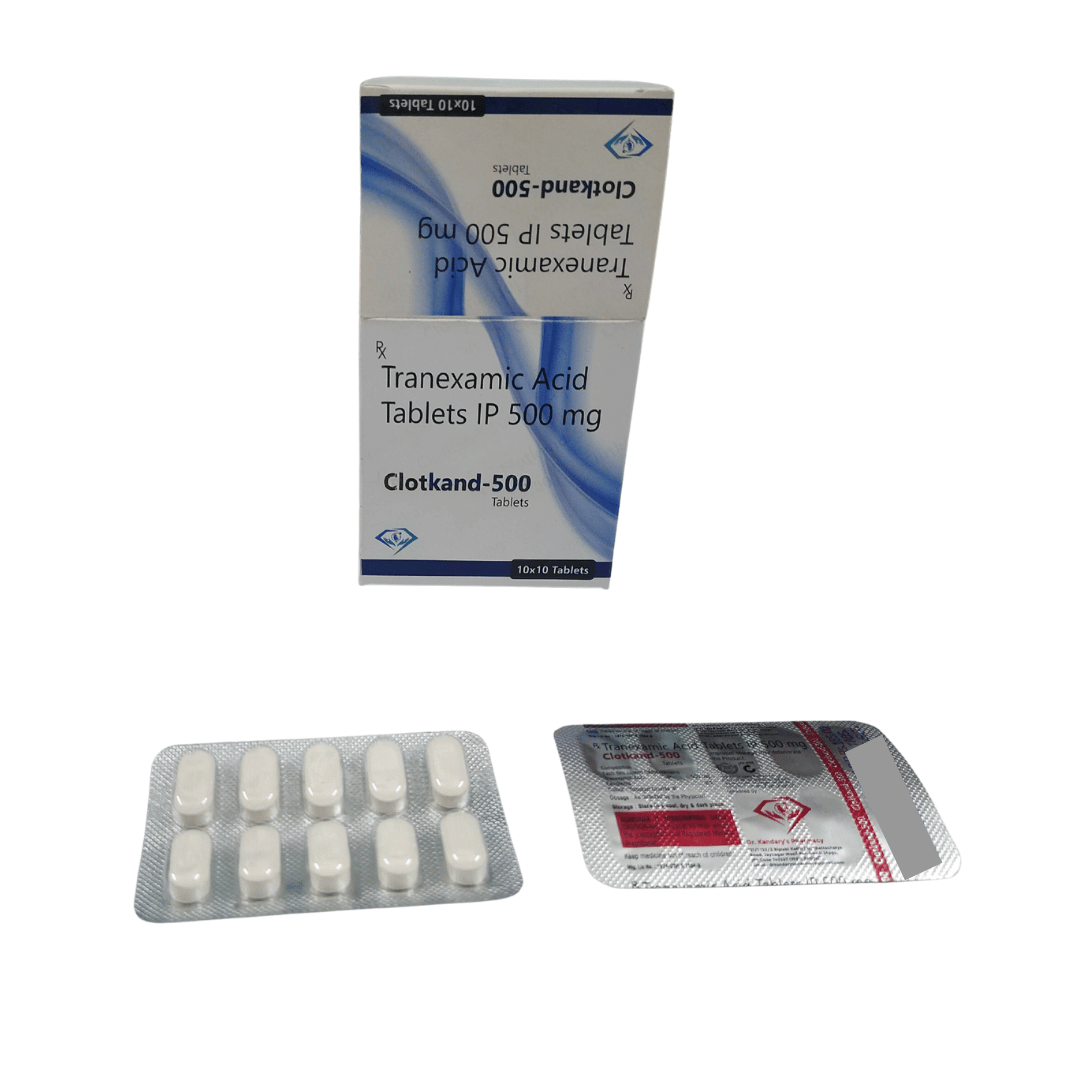
Composition
Active ingredient: Tranexamic Acid 500 mg.
Medicine class: Antifibrinolytic agent.
Tranexamic acid helps preserve fibrin clots by reducing their breakdown. The strength above is based on the supplied product information.
1. Product Introduction
Tranexamic acid is a medicine that helps control bleeding in selected situations by inhibiting fibrinolysis, the process through which the body breaks down blood clots.
CLOTKAND-500 is an oral tablet. Its appropriate use depends on the diagnosis and the treating clinician's assessment. It does not replace emergency care for severe or unexplained bleeding.
2. Uses of Medicine
Depending on local approved indications and medical assessment, tranexamic acid tablets may be prescribed for selected bleeding conditions, which can include:
- Heavy menstrual bleeding in appropriate patients.
- Some other bleeding conditions where antifibrinolytic treatment is indicated.
- Selected situations in which a clinician considers reducing clot breakdown beneficial.
The approved uses of a particular tranexamic acid product may differ. Do not use this medicine to treat unexplained bleeding without professional assessment.
3. Potential Benefits
- Helps reduce the breakdown of fibrin blood clots.
- May reduce blood loss in appropriate bleeding conditions.
- Can provide an oral treatment option when tranexamic acid is indicated.
- May help manage heavy menstrual bleeding in suitable patients under medical guidance.
Benefits depend on the cause of bleeding, the patient's health, correct use and whether tranexamic acid is appropriate for the particular condition.
4. Possible Side Effects
Possible side effects may include:
- Nausea, vomiting or abdominal discomfort.
- Headache or dizziness.
- Back pain, muscle or joint discomfort.
- Visual disturbances or other eye-related symptoms.
- Allergic reactions, which can rarely be severe.
- Blood clots, including rare but serious vascular complications.
Seek urgent medical attention for sudden chest pain, difficulty breathing, one-sided leg swelling, sudden weakness, severe allergic symptoms or sudden changes in vision.
5. How to Use
- Take only as prescribed by a qualified healthcare professional.
- Follow the prescribed dose, timing and duration for your specific condition.
- Swallow the tablet according to the product leaflet; do not alter it unless the leaflet or clinician permits this.
- Do not take extra tablets to compensate for a missed dose without professional advice.
- Do not use the medicine to delay medical assessment of severe or unexplained bleeding.
The correct dose and duration depend on the indication, kidney function and individual risk factors. This page does not provide a personal dosing schedule.
6. How It Works
Tranexamic acid is a synthetic lysine analogue. It interferes with the activation of plasminogen and the breakdown of fibrin, helping blood clots remain intact for longer.
It is an antifibrinolytic medicine, not a treatment for every cause of bleeding. Its suitability depends on the clinical situation and the patient's risk of thrombosis.
7. Safety Advice
- Blood clot history: Tell the clinician about previous or current deep-vein thrombosis, pulmonary embolism, stroke or retinal blood-vessel blockage.
- Kidney disease: Tranexamic acid is eliminated mainly through the kidneys; dose adjustment may be necessary.
- Hormonal contraception: Tell the prescriber if you use combined hormonal contraceptives because the risk of thrombosis may increase.
- Other medicines: Report all medicines, especially those that affect clotting or are used to treat bleeding disorders.
- Eye symptoms: Stop taking the medicine and obtain urgent medical advice if new visual or ocular symptoms occur.
- Pregnancy or breastfeeding: Seek individual medical advice before use.
- Allergy: Do not use if you have a known allergy to tranexamic acid.
8. Quick Tips
- Use only for the condition for which it has been prescribed.
- Tell the clinician about your medical history and all current medicines.
- Do not increase the dose or extend treatment without medical advice.
- Store the tablets according to the manufacturer's instructions.
- Seek medical evaluation for persistent, recurrent or unexplained bleeding.
- Get emergency help if symptoms suggest a blood clot or a severe allergic reaction.
Important Safety Warning
Tranexamic acid can increase the risk of blood clots in susceptible patients and may be unsuitable for people with active or previous thromboembolic disease or certain clotting risk factors. Kidney impairment can also affect medicine handling. A qualified healthcare professional must determine whether this medicine is appropriate.
This page is intended for general educational and product-information purposes only. It does not replace professional medical advice, diagnosis, treatment or the official manufacturer's package insert. Do not use this information to self-prescribe or determine an individual dose. Verify the product information and approved indications before publication or clinical use.






